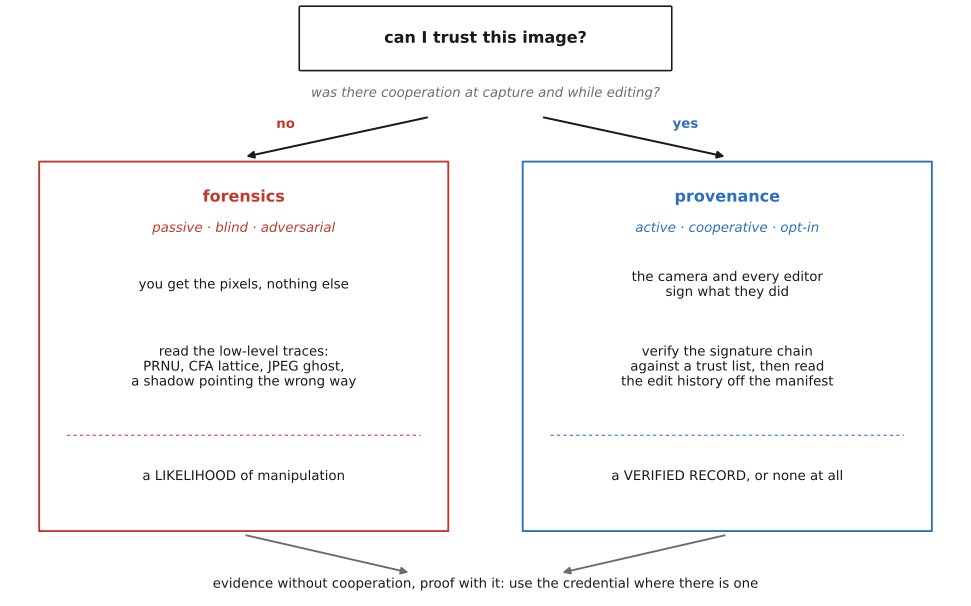
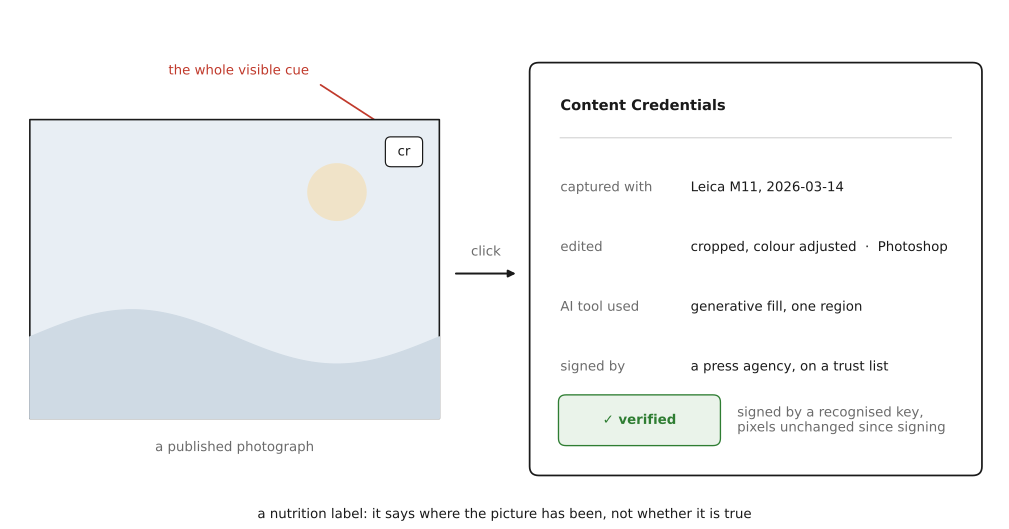
• **who and what.** **C2PA** — the *Coalition for Content Provenance and Authenticity* — is an open standard formed by merging Adobe's **Content Authenticity Initiative (CAI)** with **Project Origin** (BBC, Microsoft), now backed by Adobe, Microsoft, BBC, Intel, **Sony, Nikon, Leica, Canon**, Truepic, Google, OpenAI, and others. The consumer-facing brand is **Content Credentials** ("a nutrition label for digital content").
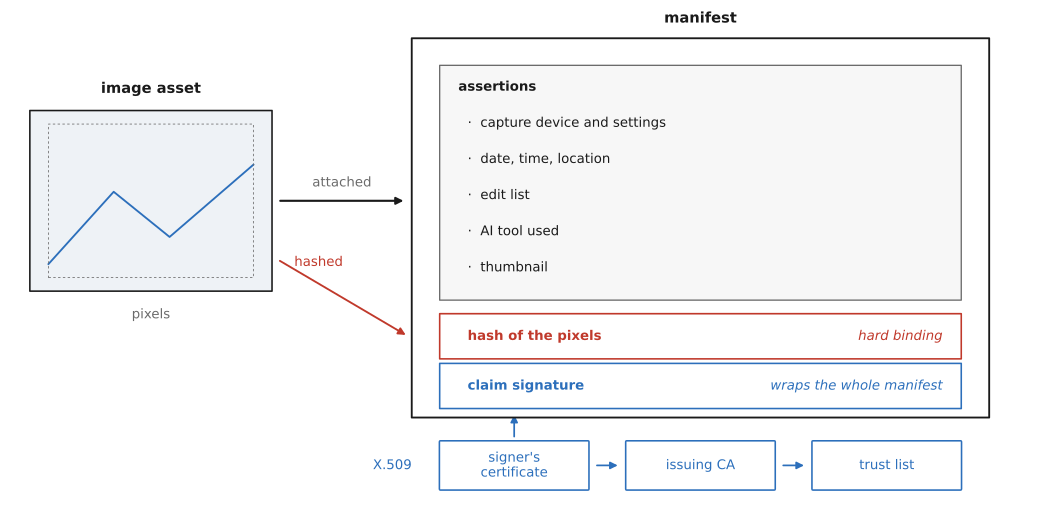
• **the manifest.** Attached to (or associated with) the asset is a **manifest**: a **tamper-evident, cryptographically-signed** bundle of **assertions** ("claims") — e.g. *capture device & settings*, *date/time/location*, the **list of edits** performed, **thumbnails** of intermediate states, **AI-generation disclosure** (was a generative model used, and how), and **who signed**. Change a pixel without updating the manifest and the **hash** no longer matches → tamper is evident.
• **the claim signature & trust.** The manifest is signed with an **X.509 certificate**; verification walks the **certificate chain** to a **trust list** of accepted signers (cameras, apps, publishers). So "verified" means *this manifest was signed by a key we recognize and the bytes haven't changed since* — **not** that the content is "true," only that its provenance record is **authentic and intact**.
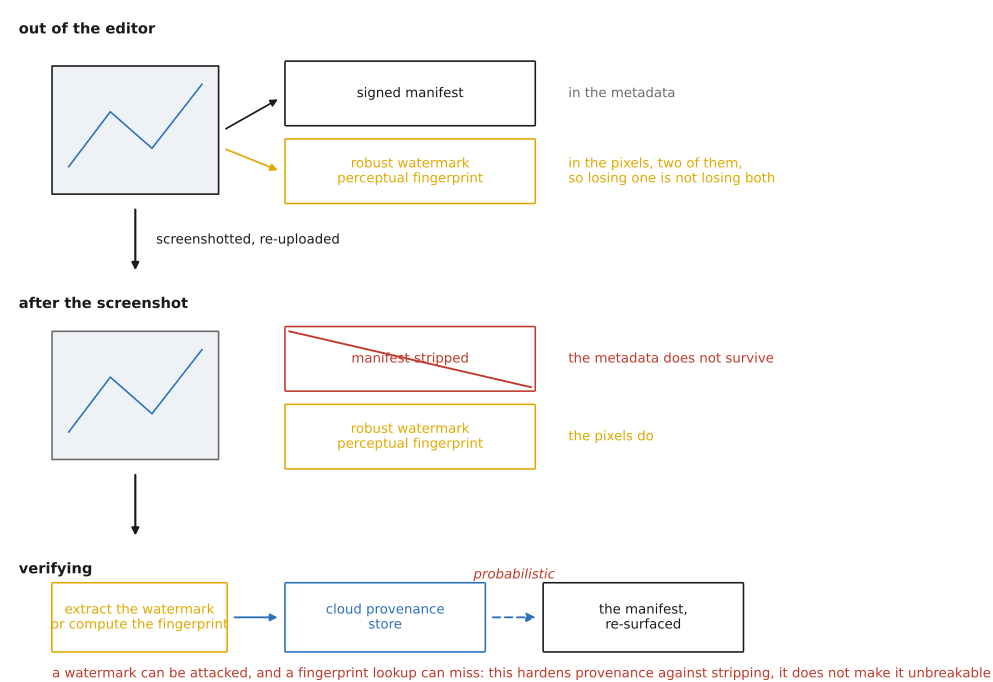
• **hard vs soft binding.** **Hard binding** = a cryptographic **hash of the pixels** in the manifest (any pixel change is detected, but the credential is lost if the file is re-encoded or the manifest is stripped). **Soft binding** = an imperceptible **watermark** and/or a perceptual **fingerprint** that lets a stripped or re-encoded asset be **re-matched** to its manifest in a provenance store. C2PA supports both.
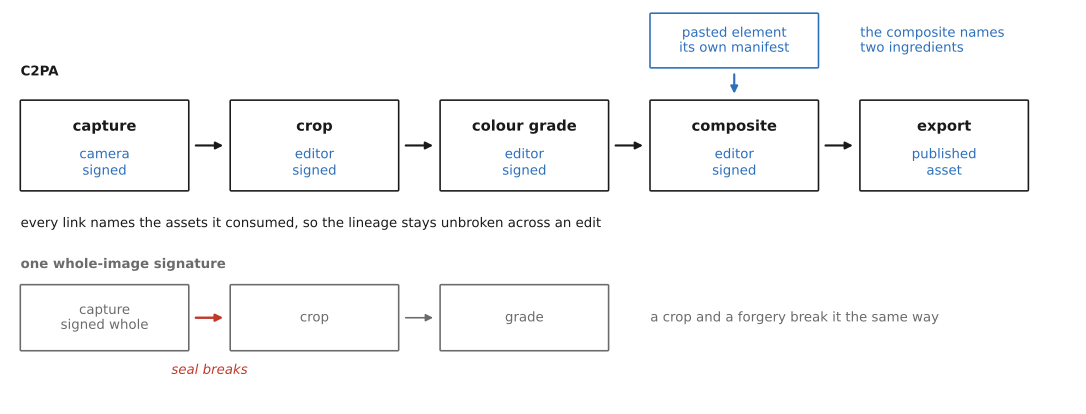
• **ingredients and provenance chains.** Edits **compose**: open a photo, crop it, color-grade it, paste in an element, export. Each step records its **ingredients** (the assets it consumed) and adds a **signed assertion**, building an **auditable lineage** from capture to publish. You can trace where a published image's pieces came from.
• **Durable Content Credentials.** Because metadata is easily stripped (a screenshot, a re-upload), Adobe/CAI pair the **signed manifest + invisible watermark + fingerprint** so provenance is **recoverable** even after stripping: match the watermark/fingerprint to the cloud provenance store and re-surface the credential. This is the practical answer to "but you can just screenshot it."
• **verification & UX.** Published assets carry a small **"cr" Content Credentials pin**; clicking it (or dropping the file into *verify.contentauthenticity.org*) shows the manifest — device, edits, AI use, signer. The whole point is a **one-click, human-readable** provenance view.