5.7 Photographic situations and tradeoffs⧉
A subject label does not choose settings. A portrait at a reception and a portrait in a studio may have more in common with two different technical problems than with each other. Work from the required result and the constraint that prevents it.
The cases below use the same sequence: inspect a failed choice, change the capture, then decide what editing can still do. The settings are starting points under stated conditions, not prescriptions for a genre.
The survey also gives the wider range of work behind these cases. A genre combines a subject, a purpose, a setting, a light regime and a technique. The same person can be photographed for a private memory, a fashion campaign or a news report; the required result and acceptable intervention differ. Focal lengths in the examples below refer to full-frame cameras unless stated otherwise. Apertures and shutter times illustrate common choices, not requirements: framing, subject speed, sensor sampling and intended output can change them substantially.
5.7.1 A moving person indoors⧉
A person is walking across a dim room. We want the eyes and expression sharp, with some background context. The first frame, made in aperture priority at f/4 and 1/60 s, looks bright enough, but the face is smeared. The stationary furniture is sharp. Stabilization has helped the camera; the subject moved.
Try 1/250 s, approximately two stops shorter. Opening to f/2 restores those two stops of light, but may leave too little depth of field. If two people at different distances must be sharp, keep f/4 and accept the reduced photon count, add illumination or wait for a pause. Raising ISO fourfold can restore brightness at f/4 but not the lost photons. These alternatives change the photograph differently.
Use continuous autofocus on the intended person, and verify the eye at a magnified view. A short burst increases the chance of a good expression or a moment of slower movement. It does not guarantee independent sharp frames, and a fusion mode can produce inconsistent fingers or facial detail. Keep a usable single-frame result when the expression matters more than clean furniture.
In editing, moderate denoising can reduce visible noise and a local adjustment can separate the face from the background. Neither recreates the expression lost during a long integration. If a little hand blur conveys movement while the face remains legible, retain it: the original requirement was a readable expression, not universal stillness.
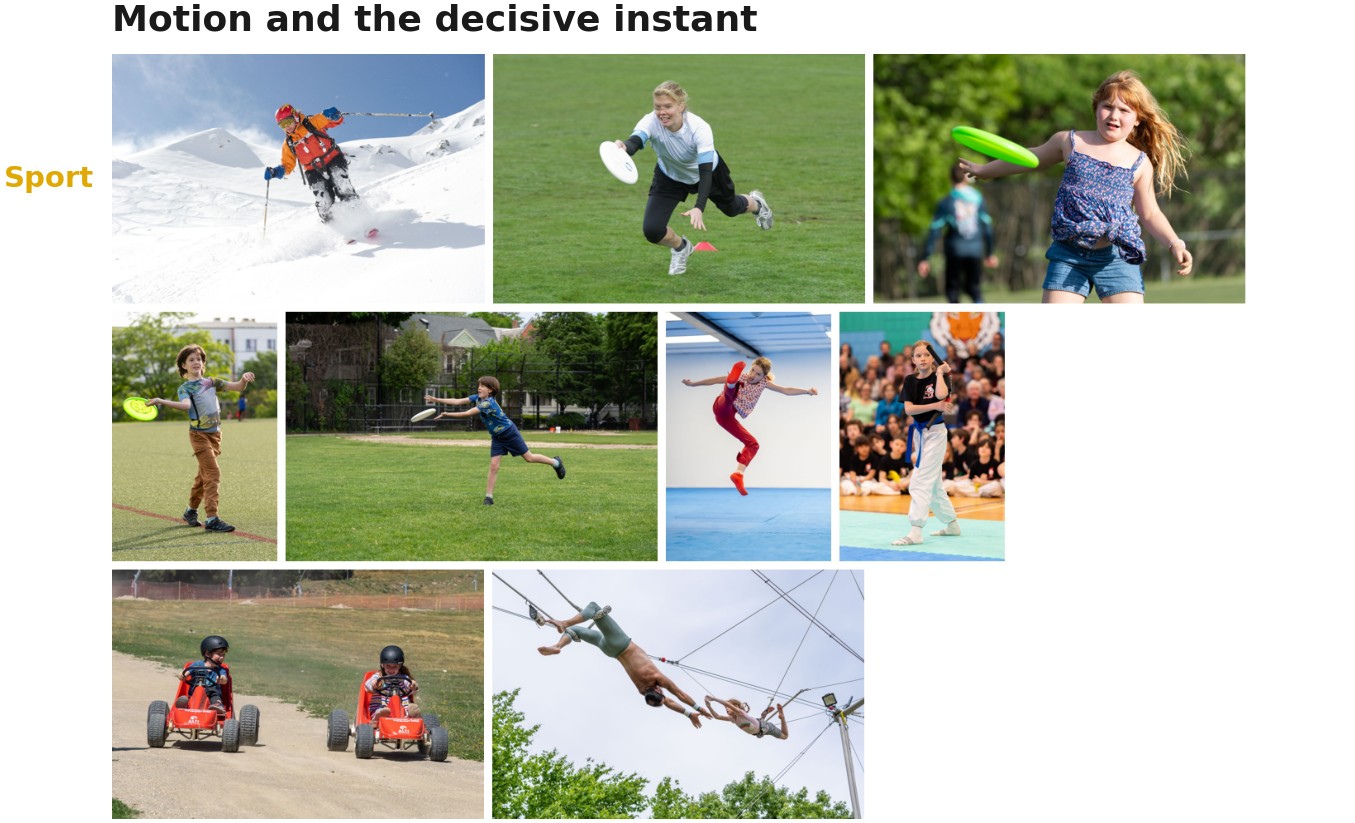
- Sport. The challenge is fast, distant, unpredictable action with a decisive peak instant; success is a sharp subject at the peak of action against a clean, isolating background. It is built on fast telephotos (f/2.8), a very fast shutter (1/1000 to 1/4000 s) to freeze motion, or deliberate panning to convey it, continuous AF with tracking, high burst rates, and high ISO for indoor arenas (the settings of Chapter 2.6, Motion blur made a profession).
- High-speed. The challenge is freezing events beyond the useful time resolution of an ordinary photographic shutter, a bursting balloon, a splash, a bullet; success is a crisp frozen instant of the otherwise invisible. A common approach uses a very short flash in a dark room, precise triggering by sound or light gates (the flash-latency point of Chapter 2.6, Motion blur), macro optics, and small apertures for depth.
5.7.2 A backlit portrait⧉
A person stands with a bright sky behind them. The first automatic exposure gives a pale sky and an acceptable face. Reducing exposure retains the sky but leaves the face dark. The scene contrast exceeds what we want in the final portrait.
Decide whether sky texture is important. If it is, retain it at capture and bring more light onto the face with a reflector or flash. Move the subject if an overhang or a different orientation gives a better balance. A large source close to the subject can provide soft fill, but its direction still matters: inspect the eyes and the shadow under the nose.
Set the aperture for the required focus, check the resulting shutter time against flash sync, and use an ND filter or high-speed sync if the chosen aperture otherwise requires a faster time. Make a frame with ambient light alone, then add flash and adjust its contribution while checking the face. For moving hair, verify that the ambient exposure has not recorded a long ghost around the flash-frozen image.
Raw development can brighten a well-recorded face and compress the sky. It cannot recover clipped sky channels, and strong shadow lifting may reveal noise. A portrait blur mode can separate the background but may mishandle backlit hair. Review the boundary at delivery size and retain the optical rendering when segmentation distracts from the person.
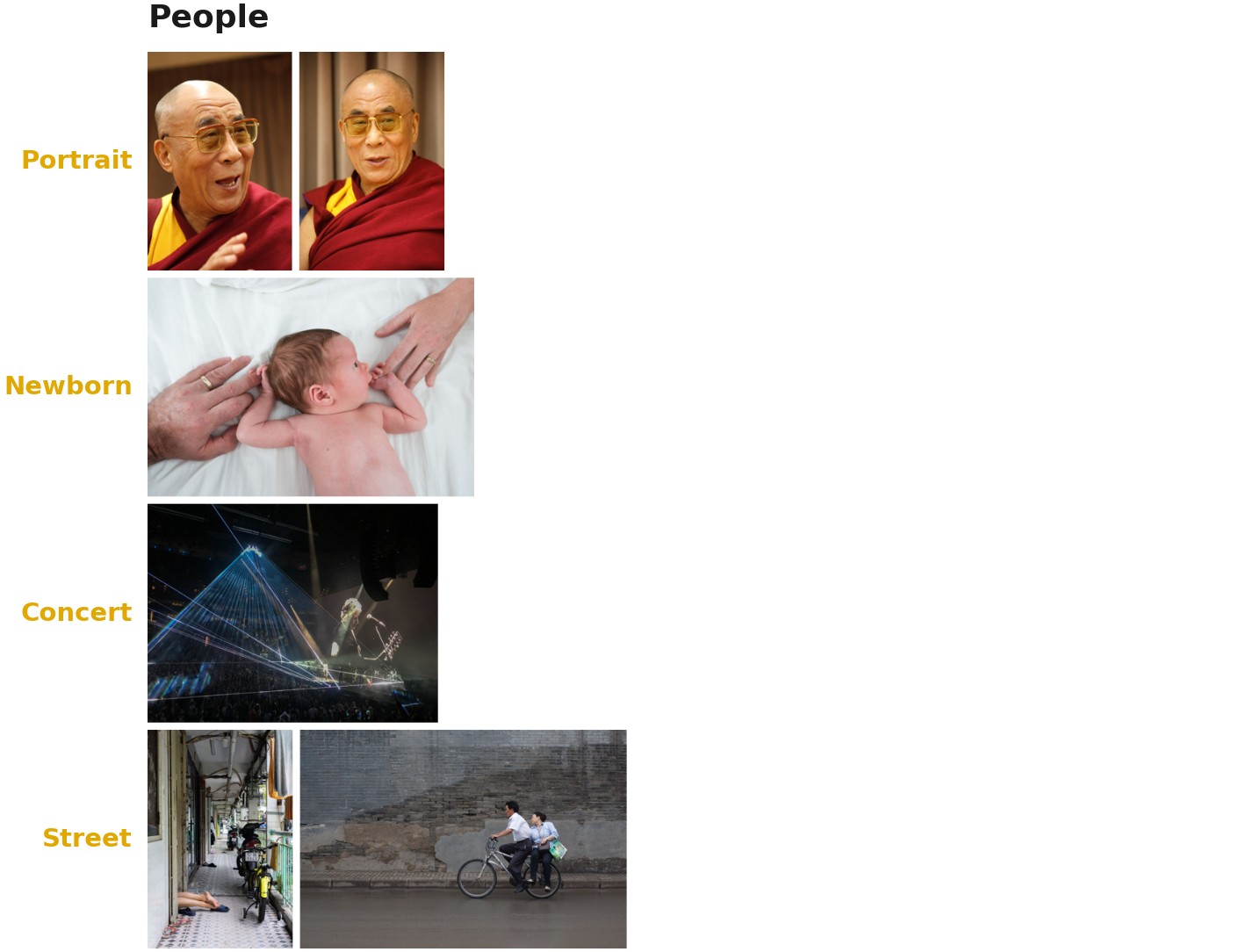
- Portrait. The challenge is a flattering, expressive rendering of a face and a real connection with the subject; success is a likeness that reveals character, with clean skin tones and a separated background. Work at a short telephoto (85 to 135 mm on full frame) from a few steps back for flattering perspective, a wide aperture (f/1.4 to f/2.8) for shallow depth of field and subject isolation, eye-detection autofocus locked on the near eye, and soft directional light from a window or a large modifier. Formal and studio portraits add controlled multi-light setups and a posed subject; candid and environmental portraits trade control for authenticity, using available light and a caught moment; maternity and newborn work is a subspecialty of patience, warmth, safety, and very gentle light.
- Event and wedding. The challenge is a once-only, fast-moving day in mixed and often poor light with no second takes; success is reliable coverage plus a handful of emotionally decisive frames. It rewards fast autofocus, a fast midrange zoom (24 to 70 mm f/2.8) and a fast prime, strong high-ISO performance, on-camera bounce or off-camera flash for receptions, dual card slots for safety, and brisk culling of thousands of frames afterward.
- Fashion, beauty, and editorial. The challenge is a constructed, stylized image serving a concept or a brand, made by a team; success is a striking, on-brief frame with flawless styling and light. Studio work uses controlled strobes and modifiers, medium apertures (f/8 to f/11) to hold the face and garment sharp, tethered capture, and retouching appropriate to the brief downstream; location editorial trades some control for atmosphere.
- Concert and performance. The challenge is very low, colored, constantly changing stage light, fast movement, and usually no flash, often from a fixed distance; success is a sharp, well-exposed, expressive frame that carries the energy. It demands fast telephoto zooms (70 to 200 mm f/2.8), high ISO with good noise control, a fast shutter (1/250 s and up) to freeze motion, continuous autofocus, and spot metering or manual exposure to survive spotlights.
- Street. The challenge is candid public life, unpredictable and fleeting, requiring speed and discretion; success is a decisive, well-composed moment with meaning or wit. Photographers favor small, quiet cameras, a normal or moderate-wide lens (28 to 50 mm), zone focus or fast autofocus, and a moderately small aperture (f/8) with a fast enough shutter to be ready without thinking.
- Photojournalism and documentary. The challenge is telling a true story under real, uncontrolled conditions on a deadline, held to an ethical bar against manipulation; success is a truthful, informative, compelling image that stands as evidence. It uses versatile fast zooms, high ISO, rugged reliable bodies, and minimal processing to preserve credibility (the ethics tie back to Chapter 5.8, Photographic representation and its limits).
5.7.3 An interior with a bright window⧉
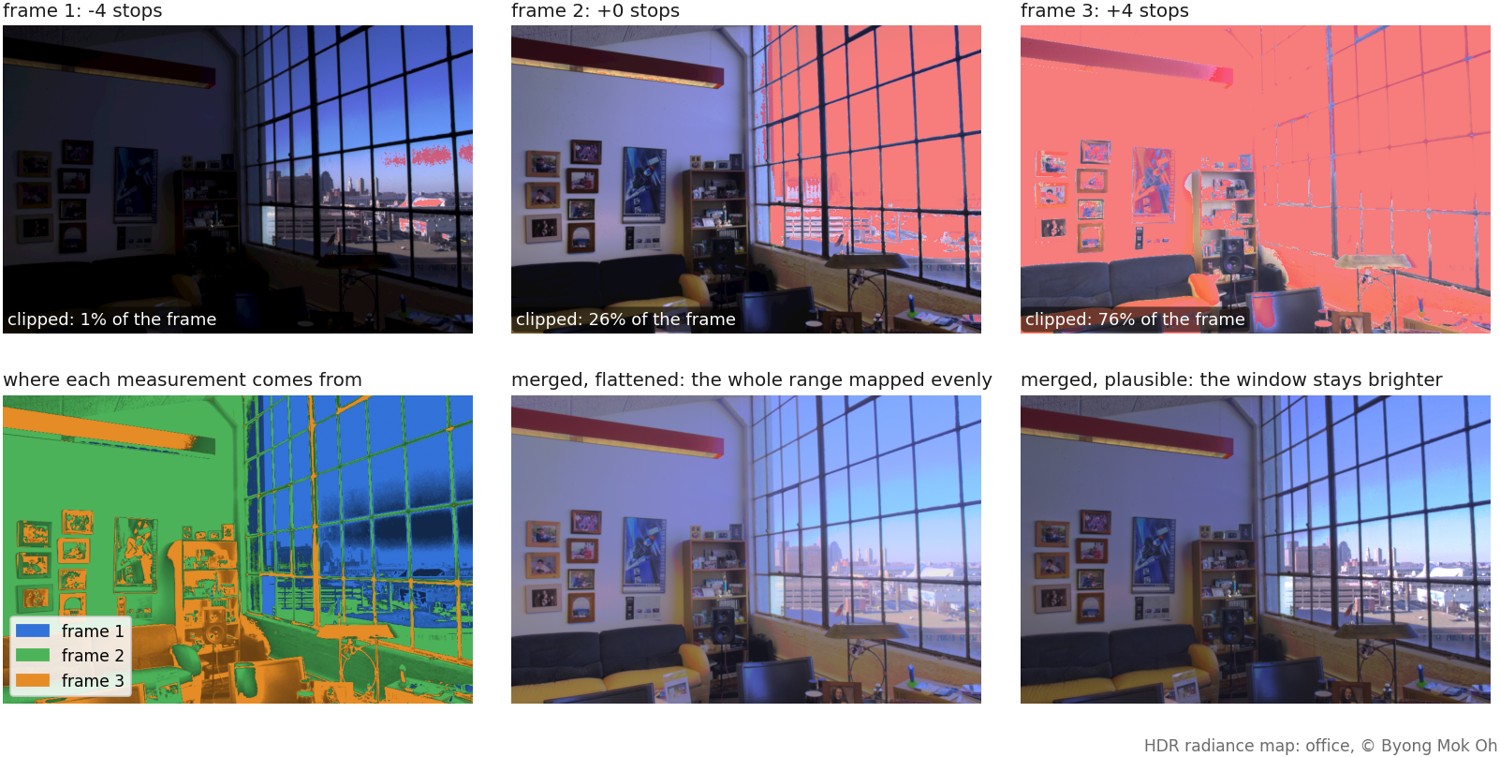
An interior contains a bright window, dark furniture and warm lamps. Exposing for the furniture clips the view outside. Exposing for the window records the room with weak shadow measurements. A single white balance also leaves either the daylight region or the lamp-lit region colored.
For a stationary room, use a tripod and an aperture that holds the required depths. Make a short exposure that retains important window detail, then increase time until the furniture is measured well. Inspect the bracket rather than assuming a fixed number of stops covers every room. Keep aperture, focus and white balance fixed so the frames differ mainly in exposure. If a curtain moves or a person enters, preserve a reference frame for that region.
Bracketing can extend the measurement range, but it does not remove the mixed illumination. Turn off a lamp, add light or reposition a source when that creates a better scene. Otherwise develop the regions with attention to their different illuminants. Keep verticals under control by leveling the camera or leaving room for a later perspective correction; that correction consumes crop and resampling resolution.
After merging, compress the range enough for the destination while preserving a plausible relationship between window and room. The outside need not be as dark as the sofa. Examine window edges for halos and moving objects for ghosts (Figure 5.7.5). A clipped frame is not automatically unusable if another bracket retains the region, but a region clipped in every input has no measured detail to recover.
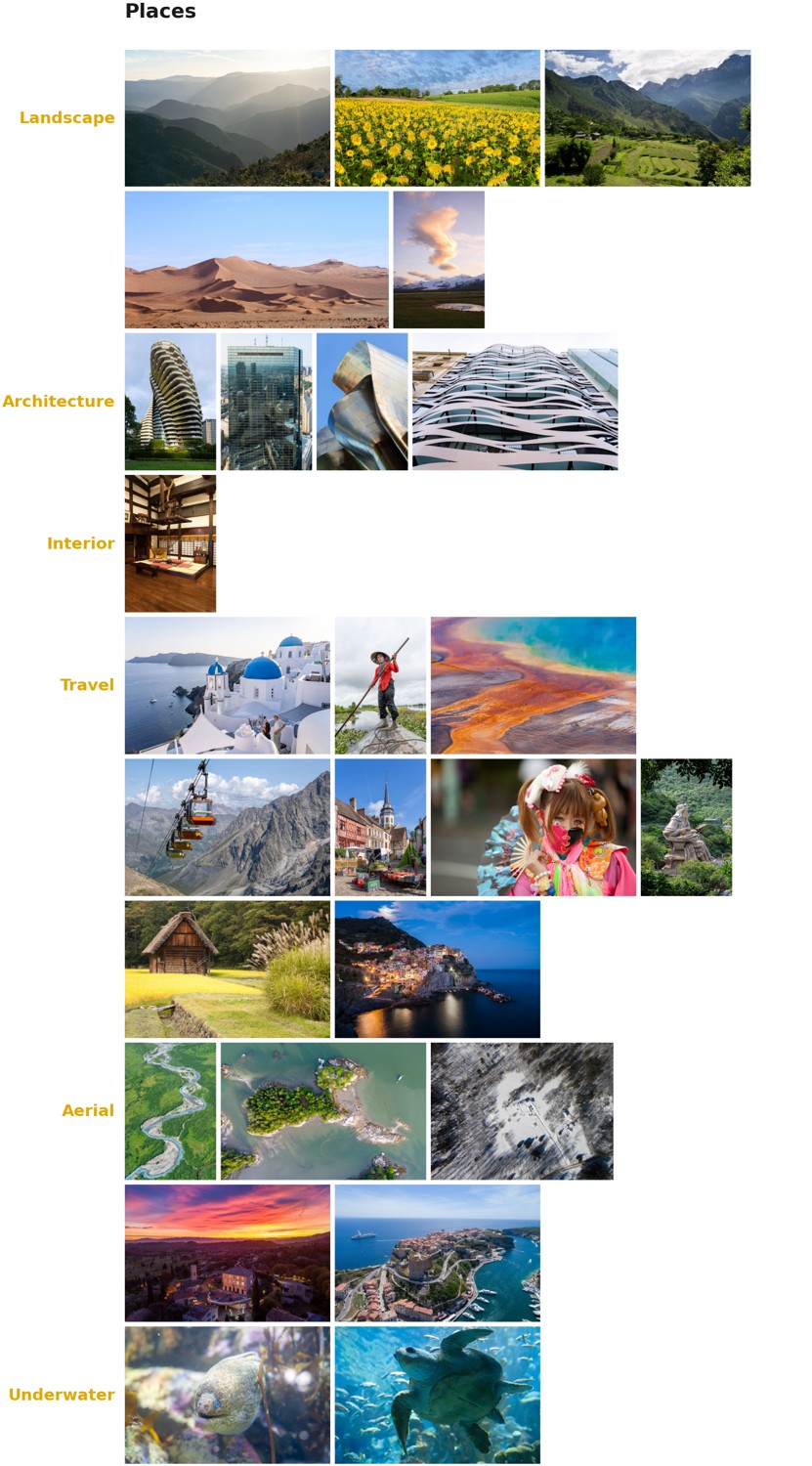
- Landscape. The challenge is rendering depth, scale, and light in a scene you cannot move or control, usually at the edges of the day; success is front-to-back sharpness, balanced tonality, and a sense of place. It rewards a tripod, small apertures (f/8 to f/16) for deep depth of field, wide to normal lenses, low ISO, hyperfocal focusing, and graduated ND filters or exposure bracketing for high-dynamic-range skies (the chapters of Multiple exposure imaging).
- Architecture. The challenge, mostly outdoors, is conveying a building's form and scale while controlling converging verticals; success is straight lines, even light, and a clean composition. It uses tilt-shift (perspective-control) lenses or later digital correction, small apertures for sharpness, a tripod, and patient timing for light and empty frames; the converging-verticals question ties to Chapter 5.8, Photographic representation and its limits.
- Interior. The challenge is a confined space with extreme mixed lighting (window plus tungsten plus fluorescent) and the need for wide coverage; success is a natural, inviting, balanced room with true verticals. It demands ultrawide lenses, a tripod, small apertures, exposure blending or flash to balance window and room light, and white-balance care across mixed sources.
- Travel. The challenge is a broad, unpredictable range of subjects (people, places, food, night) with one light kit and little control; success is an evocative sense of a place across varied conditions. It rewards a versatile single lens or a light two-lens kit, adaptable settings, and readiness more than specialization.
- Aerial. The challenge is shooting from a moving, vibrating platform (drone, plane, helicopter) with no tripod; success is a sharp, well-composed frame despite the motion. It needs fast shutter speeds (1/1000 s and up) to beat vibration, moderate apertures, focus at or near infinity, and, for drones, a stabilized gimbal; it overlaps with mapping and remote sensing.
- Underwater. The challenge is a medium that absorbs light and color with depth, drops contrast, and threatens the housing; success is color, contrast, and sharpness restored against a blue-green cast. It needs a sealed housing, strobes to put back the lost red end, wide or macro lenses (little middle ground), and getting close to cut the water column between lens and subject.
5.7.4 A close-up object⧉
A small object must be sharp from its front label to a rear fitting. A single close exposure at f/8 leaves the back soft. Stopping down further helps depth of field but softens fine lettering through diffraction and demands more light.
First rotate the object or camera so the important surface lies closer to the focus plane. Choose working distance that leaves room for illumination. At high magnification the marked aperture can understate the effective f-number. For a symmetric thin-lens model,
At magnification $m=1$, marked f/8 behaves approximately like effective f/16 for exposure and image-side diffraction. Compound lenses can require a pupil-magnification correction, so use this as an explanation of the trend, not a calibration of every macro lens.
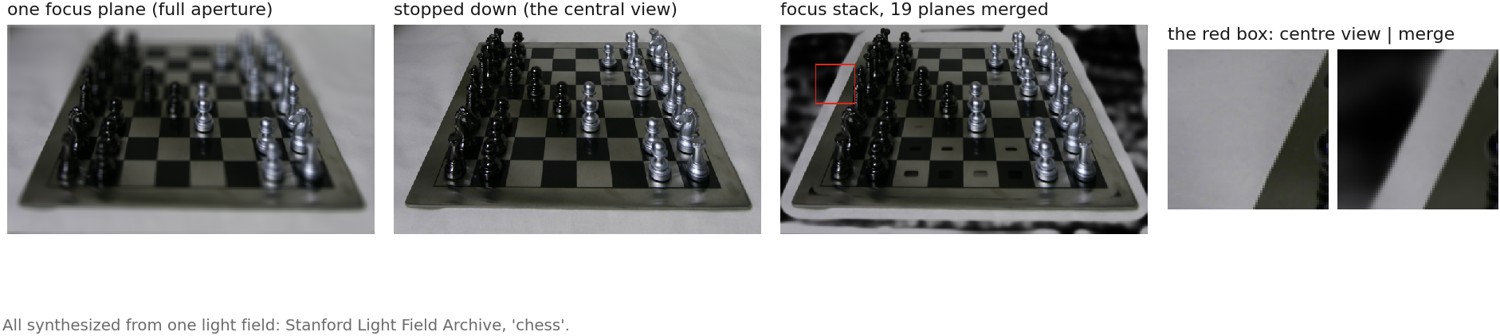
If one exposure still cannot cover the needed depths, photograph overlapping focus positions. Keep illumination and exposure consistent, begin before the nearest required detail and finish beyond the farthest. Choose the increment from actual sharp coverage; arbitrary equally spaced ring markings need not give adequate overlap. Focus breathing changes scale, and moving the camera on a rail can change perspective and occlusion.
A focus stack selects detail from different measurements. Inspect the composite around glossy boundaries, thin projections and overlap transitions (Figure 5.7.8). A missing slice cannot be repaired by sharpening. For a moving insect, a well-placed single focus plane and brief illumination may be more reliable than a stack whose subject changes between frames.
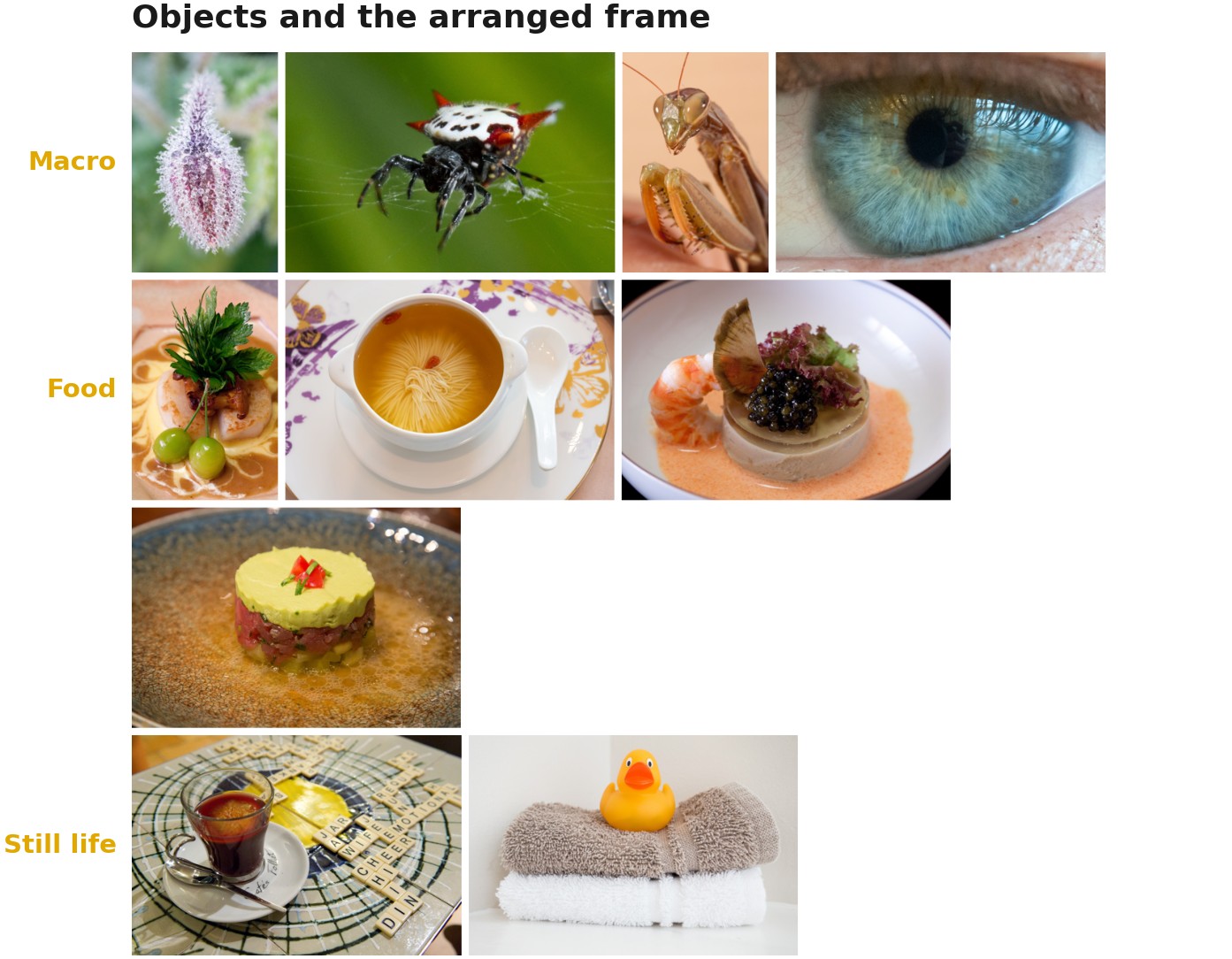
- Macro. The challenge is extreme magnification, where depth of field shrinks to millimeters and any motion or vibration ruins sharpness; success is a sharp, detailed subject with enough depth to read. It uses macro lenses (1:1), apertures chosen to trade depth of field against diffraction, focus stacking (a multiple-exposure technique) for depth, a tripod or flash to kill motion, and diffused close light.
- Product. The challenge is a clean, accurate, appealing rendering of an object for commerce, often on white or in a built set; success is controlled color reproduction, controlled reflections, full sharpness, and a background ready for a clipping path. It uses studio strobes with large soft modifiers, small apertures (f/8 to f/16), tethered capture, focus stacking for small items, and careful reflection control (tents, flags, gobos).
- Automotive. The challenge is a large, glossy, reflective object whose whole surface mirrors its surroundings, shot static (a hero shot) or rolling (motion); success is clean, shaped reflections and a sense of the car's form or speed. Static work uses huge soft sources or light-painting and heavy reflection management; rolling shots use a rig or a panning follow at a slow shutter (1/60 s and down) to blur the road and wheels while the car stays sharp.
- Food. The challenge is making perishable food look fresh, appetizing, and textured before it wilts; success is appetizing color, texture, and a natural, styled scene. It rewards a food stylist, soft directional light (often backlit or from the side) to bring out texture, a normal to short-macro lens, medium apertures for a readable but not flat depth, and speed before the food dies.
- Still life. The challenge is total authorship of an arranged scene, so composition and light carry everything; success is a deliberate, balanced, expressive arrangement with controlled light. It uses a tripod, controlled continuous or strobe light, small apertures for sharpness, focus stacking when needed, and unhurried attention; it is the genre closest to painting.
5.7.5 A phone document capture⧉
A receipt must retain small text, a date and a faint total. The first capture is tilted, and a ceiling light reflects across the total. Automatic contrast makes the paper white but erases the pale characters. The result looks tidy and fails its task.
Flatten the paper if possible, clean the lens, and place the camera approximately parallel to the page. Fill enough of the frame to sample the smallest important text while retaining the edges needed for rectification. Move the light or camera slightly to remove glare, then restore a suitable geometry. A larger soft source can still reflect in glossy paper; inspect the reflection rather than assuming softness solves it.
Check focus on the page and make the exposure short enough for a sharp handheld capture. Review the faintest text before applying a black-and-white document filter. Save the color source alongside the rectified or thresholded version when information retention matters.
Perspective correction can straighten a plane, but it stretches the poorly sampled far edge and cannot undo glare or missing ink. Optical character recognition can make the text searchable; compare names, dates and totals against the photograph rather than treating recognized text as evidence of what the page contained. Generative cleanup is inappropriate when it can invent or replace the information being recorded.
5.7.6 Adapting the cases: wildlife⧉
A bird in flight has the same motion and focus constraints as the moving-person case, with less control over distance and framing. A long lens enlarges both the subject and angular shake. Test the required time against the bird's motion, use a focus area that can follow it without selecting the background, and leave enough room for unpredictable movement. A perched bird may permit a longer exposure, but leaves, feathers and the head can still move.
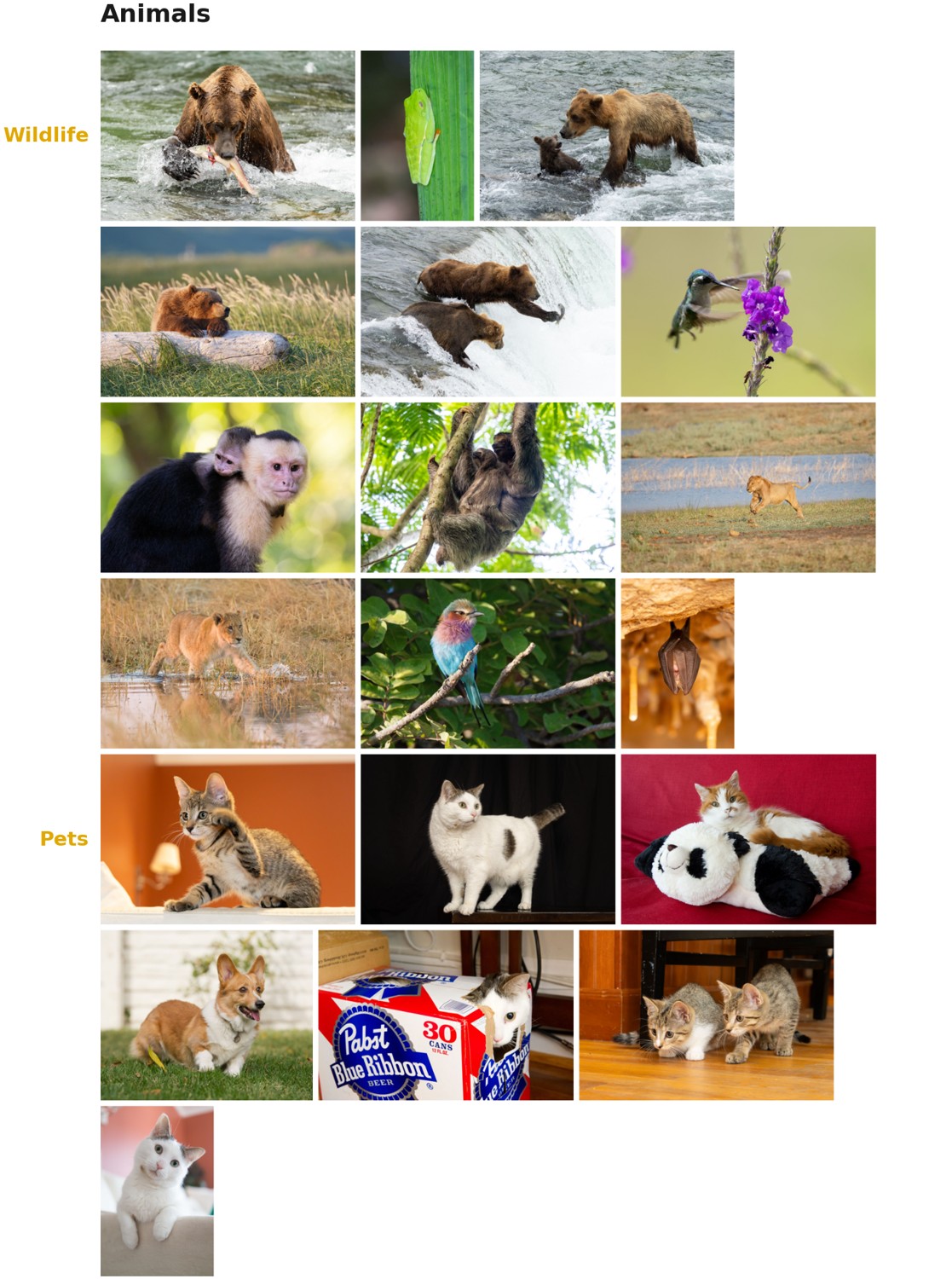
- Wildlife. The challenge is shy, distant, fast, unpredictable animals in the field, often in poor light; success is a sharp, intimate, behavior-revealing frame with a catchlight in the eye. It is the domain of long fast telephotos (300 to 600 mm), a fast shutter (1/1000 s and up), continuous autofocus with animal-eye detection, high ISO, and patience, blinds, and fieldcraft.
- Pets and domestic animals. The challenge is an uncooperative, fast, low-to-the-ground subject; success is a sharp, characterful frame at the animal's eye level. It uses a fast shutter, continuous eye-AF, burst mode, get-down-low framing, treats and patience, and window light or bounced flash rather than direct flash into sensitive eyes.
5.7.7 Adapting the cases: night and sky⧉
A static night scene can spend time to collect photons. Stars move across the sensor because the Earth rotates, so an untracked exposure trades light against trails. A tracking mount changes that trade but can blur the terrestrial foreground. A burst can increase total integration while permitting rejection of disturbed frames; it also incurs repeated read noise. Choose the capture around which parts must remain sharp, then use the noise model in Chapter 2.8, Noise, signal-to-noise ratio and dynamic range to compare alternatives.
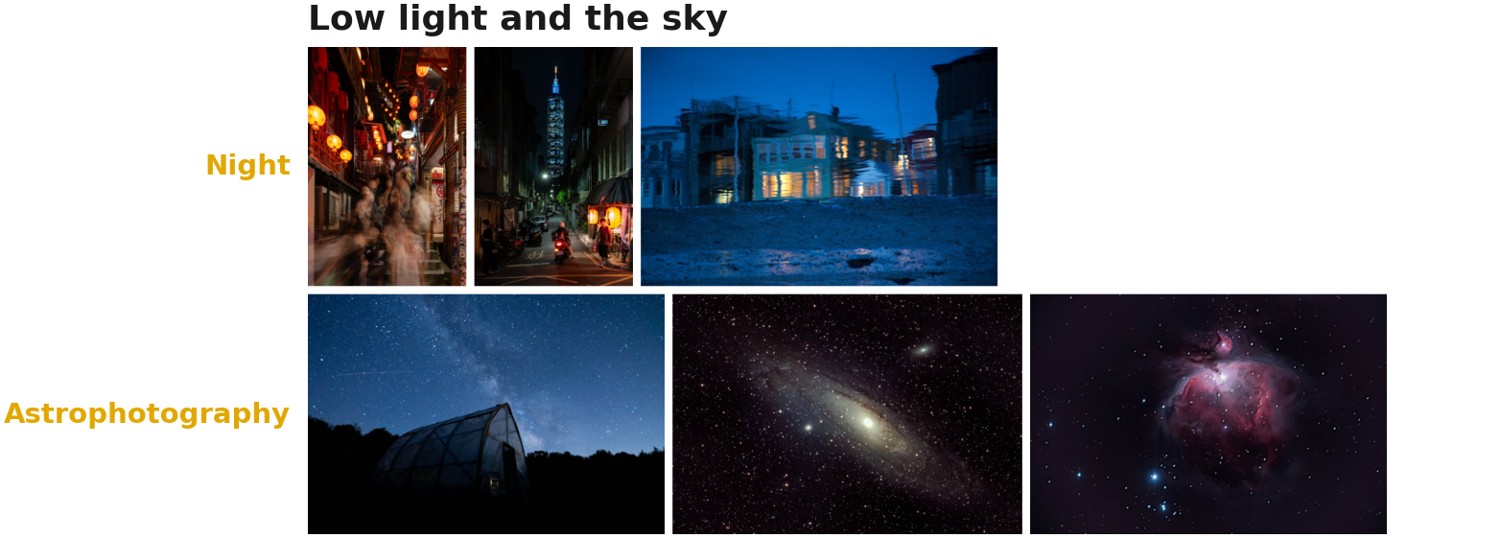
- Night. The challenge is scarce light, a high dynamic range from point sources, and the long exposures that follow; success is a clean, atmospheric frame that holds both shadow and highlight. It needs a tripod, long exposures, low ISO where possible (or careful high-ISO denoising), wide apertures, manual focus, and often exposure blending for lit signage against a dark sky.
- Astrophotography. The challenge is extremely faint light and the Earth's rotation, which smears stars during the long exposures they demand; success is sharp point stars (or deliberate trails) and faint detail pulled from noise. It uses fast wide lenses (f/2.8 or faster), high ISO, the exposure limit before stars trail (or a tracking mount), and stacking many frames to beat noise (the chapters of Multiple exposure imaging at their physical extreme).
- Long exposure. The challenge, and the point, is letting time accumulate: smoothing water, streaking clouds and lights, erasing crowds; success is the intended motion rendered as silk, streak, or emptiness while the static scene stays sharp. It requires a tripod, strong neutral-density filters to allow seconds-to-minutes exposures in daylight, low ISO, small apertures, and a remote release.
5.7.8 When the intended result is abstract⧉
A photograph can deliberately omit detail, blur movement or distort familiar scale. Judge these choices against the work's intention. A blurred landscape can succeed as an image of light and motion while failing as a survey of the terrain. Technical tests become useful only after specifying which of those tasks is being attempted.
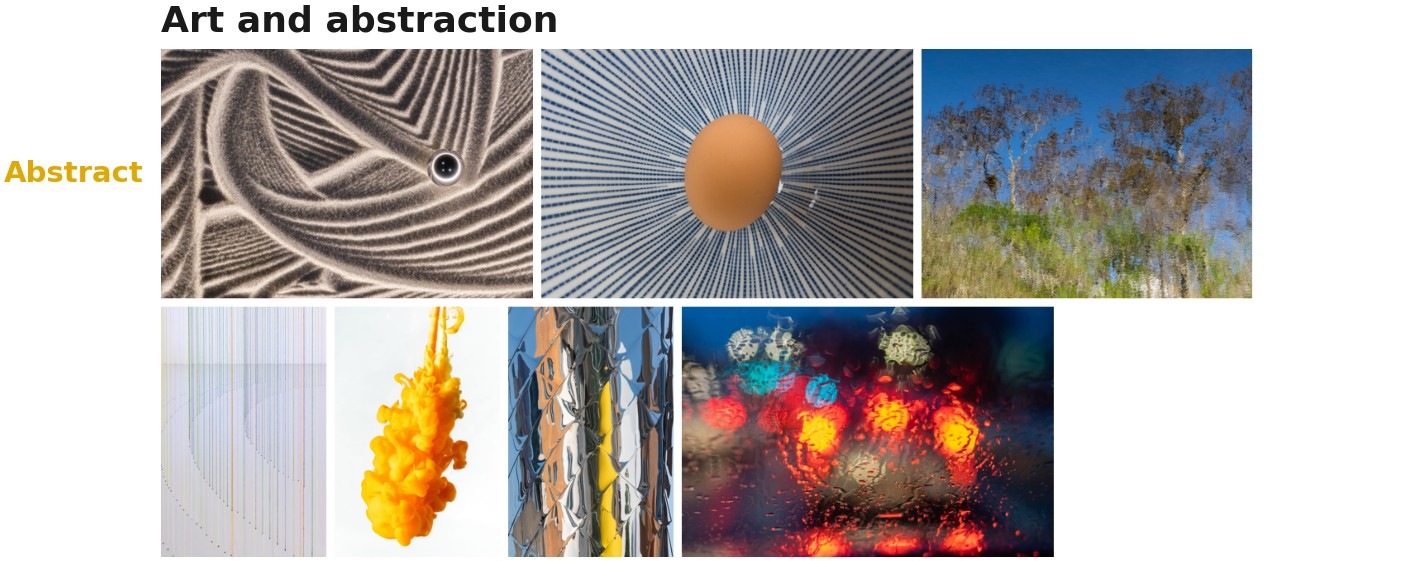
- Fine-art and conceptual. The challenge is serving an idea rather than a client or a record, so intent and coherence matter more than any rule; success is a resolved image or series that carries meaning and a personal vision. Technique is entirely subordinate to the concept, and any setting is fair game if it serves the idea.
- Abstract and minimalist. The challenge is making compelling images from form, color, texture, and negative space rather than a recognizable subject; success is a strong graphic composition that reads as design. It rewards close attention to light, pattern, and framing, often a longer lens to isolate and flatten, and precise exposure to hold clean tones.
5.7.9 When the apparatus changes the problem⧉
A panorama, infrared conversion or aerial platform changes the available measurements. Choose it because a property is needed: wider coverage, spectral separation or a different viewpoint. Then check its associated failure cases. A panorama can break at nearby moving objects; an infrared image needs a different interpretation of tone and focus; a vibrating aerial platform can require short integration even over a static scene.
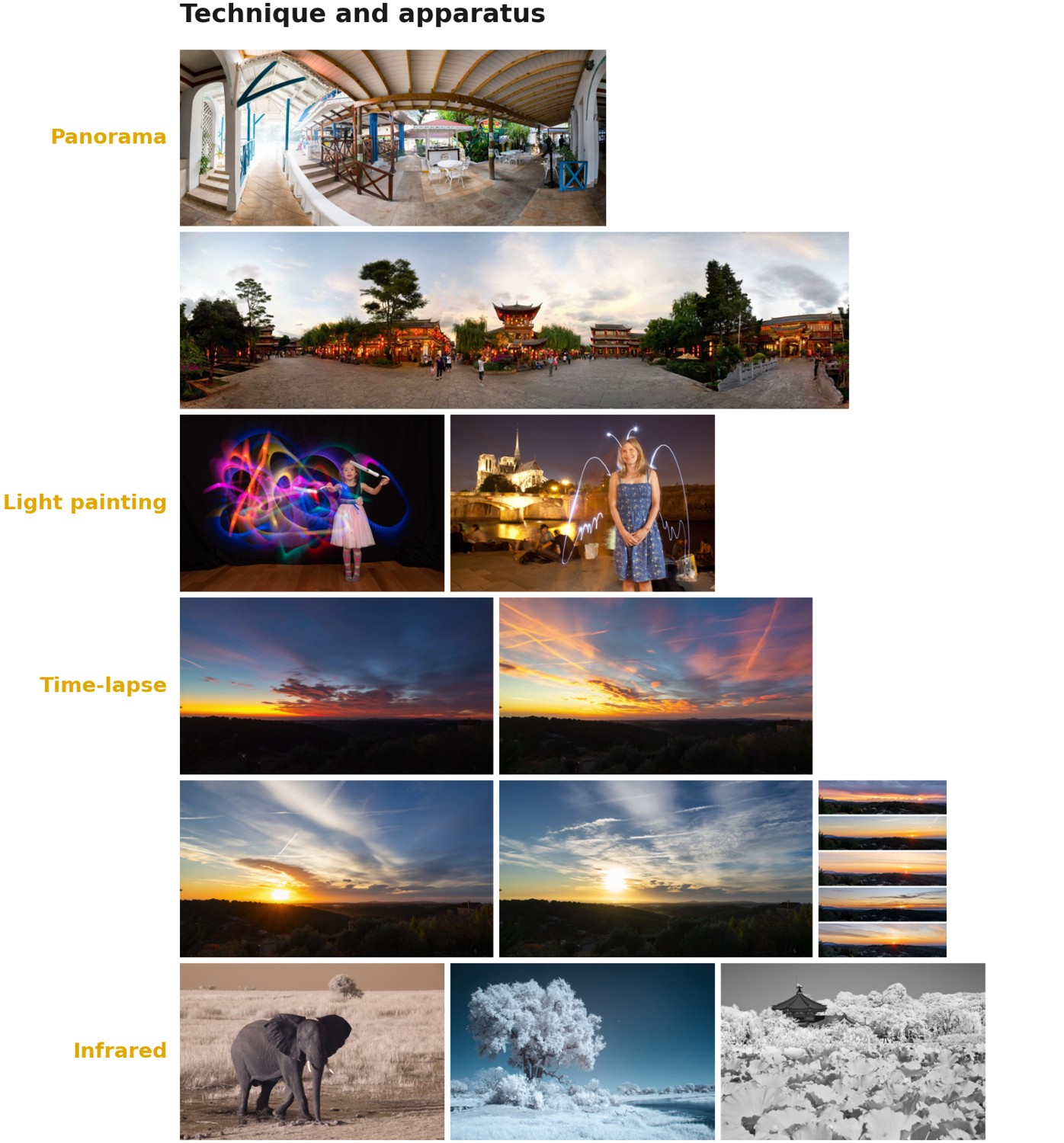
- Panorama. The challenge is exceeding a single frame's field of view or resolution by stitching many; success is a seamless, distortion-controlled wide or gigapixel image. It uses consistent manual exposure and focus across frames, generous overlap, rotation about the lens's no-parallax point, and stitching software (the multiple-exposure and warping chapters).
- Composite and montage. The challenge is combining several exposures or elements into one believable, or deliberately unbelievable, image; success is consistent light, perspective, and edges so the seams vanish (or the surrealism lands). It relies on matched capture (same light and lens), masking, and compositing, and it sits squarely on the ethics continuum of Chapter 5.8, Photographic representation and its limits.
- Light painting and special effects. The challenge, and the fun, is building an image over a long exposure by moving lights, the camera, or the subject in the dark; success is the intended luminous drawing or effect cleanly rendered. It uses a dark environment, long exposures, a tripod (or deliberate camera motion), handheld light sources, and much trial and error.
- Time-lapse. The challenge is compressing slow change (clouds, stars, construction, crowds) into motion by shooting frames at intervals and playing them fast; success is smooth, flicker-free motion with consistent exposure. It needs an intervalometer, stable support, manual exposure or careful day-to-night ramping, and steady intervals; a motorized slider adds a moving camera on top.
- Infrared, ultraviolet, and X-ray. The challenge is imaging outside the visible band, which ordinary cameras filter out and ordinary optics and lighting are not built for; success is a clean image in the invisible band, revealing what visible light hides. Infrared needs a camera with suitable near-infrared sensitivity, often converted by removing its IR-cut filter and an IR-pass filter, recording bright foliage through the Wood effect and often dark skies; false color depends on the channel mapping (the near-IR discussion in Chapter 2.7, Sensors — photosites, CCD vs CMOS); reflected-UV imaging needs suitable transmitting optics, filtration and sources; X-ray needs a source and a detector wholly outside ordinary photography, in medical, industrial, and security imaging.
5.7.10 One frame, or a body of work⧉
For a single finished image, we can spend time on lighting, capture and revision. For an event or a photographic essay, coverage and the relationships between frames matter too. A technically excellent close-up does not replace a missing establishing view.
Plan ingestion and backup, select frames for what the sequence says, and check consistency of rendering without forcing every lighting condition into the same look. A preset is a starting point. The edit must still retain differences that matter to the story.
In a sequence, two excellent photographs can be redundant while a less dramatic one supplies missing context. A wedding series needs more than repeated peak expressions; a travel essay may need a wide view, a detail, and an interaction to explain the place. During selection, ask what each frame contributes and how the transition to its neighbors reads. Consistent rendering can help the sequence cohere, but it should not erase a meaningful change in illumination or setting. The unit being edited is the set, so judging every frame independently misses part of the photographic task.
The consequence is practical. Single-frame work rewards patience, control, and sheer quality per frame. Multi-frame work rewards reliability, throughput, fast culling, and editorial judgment, and it makes backup, ingestion, and a repeatable processing pipeline part of the job rather than an afterthought. The same subject can sit on either side, a portrait can be one considered frame or a shoot-a-minute event take, but the tendency is real, and it shapes a photographer's day as much as the subject does.