BookNotesSlidesP-sets Syllabusdraft · v0.2.49.1
💬Comments welcome. To leave a note, select any text and click the note / highlight button that pops up — or open the panel with the tab at the top-right (‹). Notes are visible only inside our private review group.
Computational Photography, an AI-powered Slopendium — 31 Light fields and plenoptic cameras
expand to📖 Full book outline1 parts · 10 chapters · 52 sections · 15 figures embedded · 2 placeholders · double-click a figure to enlarge
▸Part 31 LIGHT FIELDS AND PLENOPTIC CAMERAS⧉
<!--uid: light-fields-and-plenoptic-cameras-->
---
▸31.1 Light fields 101⧉
31.1.1 Capture rays, not pixels⧉
31.1.2 The plenoptic function, reduced to four dimensions⧉
31.1.3 Ray and point are dual⧉
31.1.4 Reading the 4-D structure through its 2-D slices⧉
31.1.5 Rendering a new view by looking up rays⧉
31.1.6 Light fields vs. plenoptic and radiance⧉
▸31.2 Light field cameras⧉
31.2.1 Integral photography: Lippmann's fly's-eye plate (1908)⧉
31.2.2 The plenoptic camera: a microlens array on the sensor⧉
31.2.3 Lytro: the consumer plenoptic camera⧉
31.2.4 Commercial light-field cameras beyond Lytro⧉
31.2.5 Camera arrays: a grid of full cameras⧉
31.2.6 The spatial↔angular tradeoff⧉
31.2.7 Two strategies, and why arrays and microlenses are dual⧉
▸31.3 Other light field acquisition setups⧉
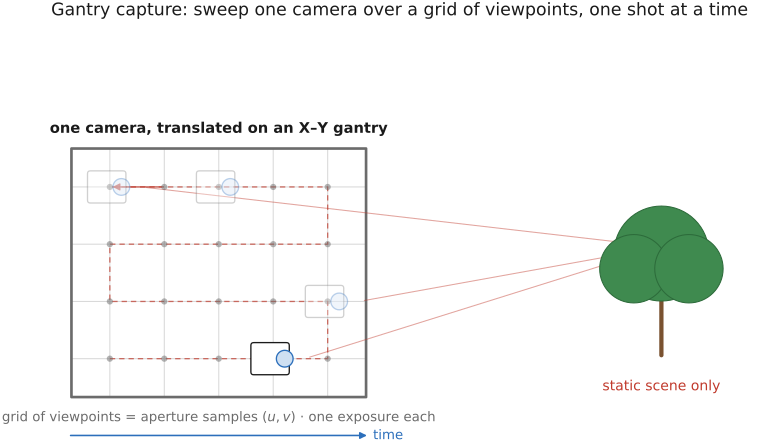
fig-lf-gantry-capture
fig-lf-gantry-capture ·
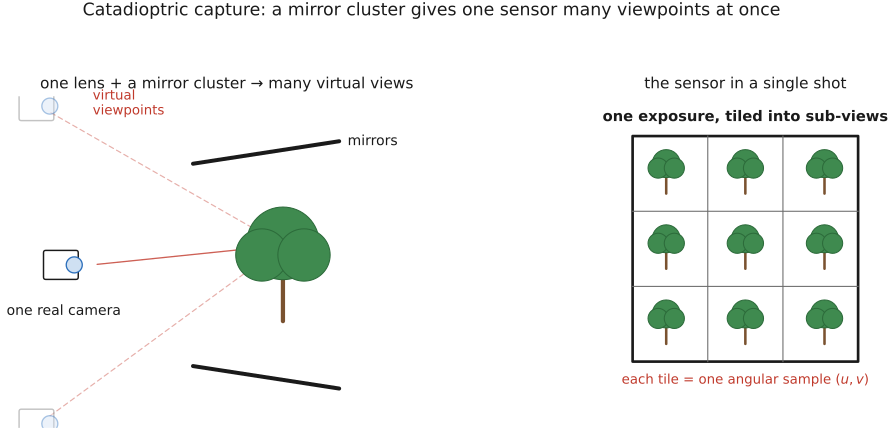
fig-lf-catadioptric-mirrors
fig-lf-catadioptric-mirrors ·
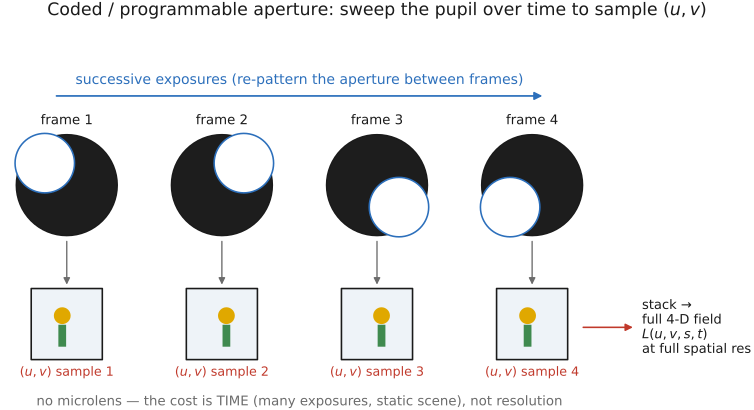
fig-lf-coded-aperture-acq
fig-lf-coded-aperture-acq ·
31.3.1 One camera on a gantry: sample the aperture in time⧉
31.3.2 Handheld, unstructured capture: let the poses be irregular⧉
31.3.3 Catadioptric capture: one sensor, many viewpoints at once⧉
31.3.4 Coded aperture in time: sweep the pupil itself⧉
31.3.5 The everything-else, mapped⧉
▸31.4 Refocusing and synthetic aperture⧉
31.4.1 Reconstructing a photo: it is all about which rays you sum⧉
31.4.2 Digital refocusing is shift-and-add⧉
31.4.3 A focal stack from one capture, and an all-in-focus image⧉
31.4.4 Fourier-slice photography: the fast version⧉
31.4.5 Reading refocus and depth off an epipolar slice⧉
31.4.6 Synthetic aperture: an aperture the size of a room⧉
▸31.5 Aberration correction in light fields⧉
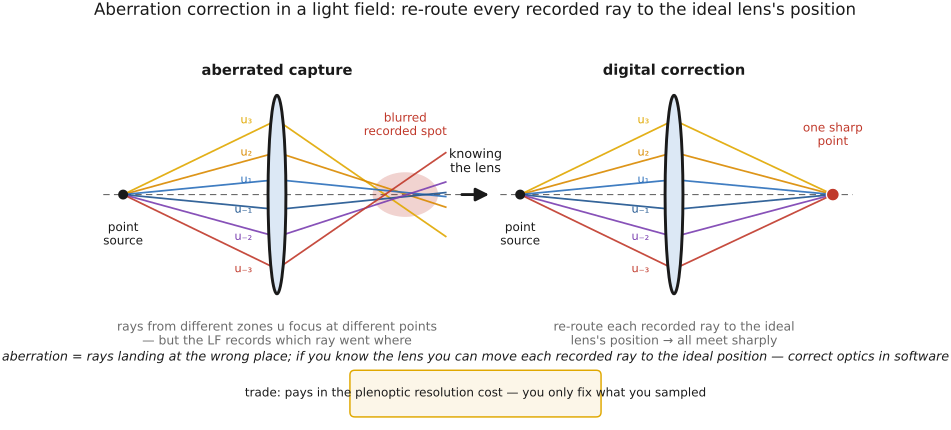
fig-lf-aberration-correction
fig-lf-aberration-correction ·
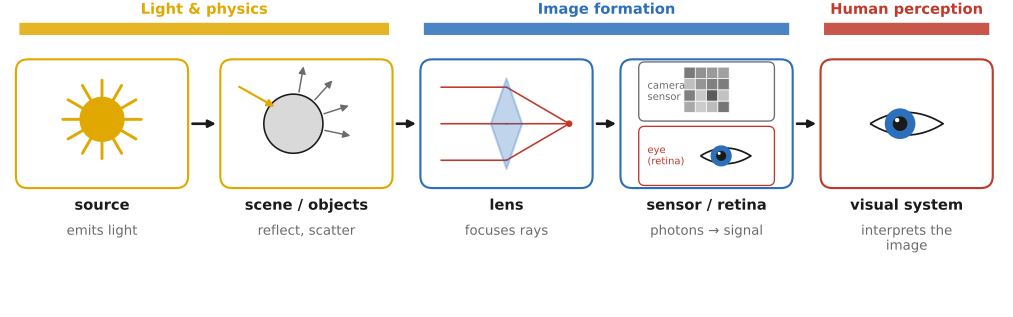
fig-light-journey
fig-light-journey · FUNDAMENTALS part opener — the journey of light: source → scene (reflection) → lens → sensor / retina → visual system, each step labeled with its chapter ✅
31.5.1 An aberration is misrouted rays⧉
31.5.2 Re-routing each ray to the ideal-lens position⧉
31.5.3 The trade: ray bookkeeping instead of glass, and only what you sampled⧉
▸31.6 Light field aliasing and 4D Fourier analysis⧉
fig-lf-4d-spectrum
fig-lf-4d-spectrum ·
fig-plenoptic-sampling-bound
fig-plenoptic-sampling-bound ·
fig-lf-aliasing-ghosting
fig-lf-aliasing-ghosting ·
31.6.1 The light field is a sampled signal, and its samples are viewpoints⧉
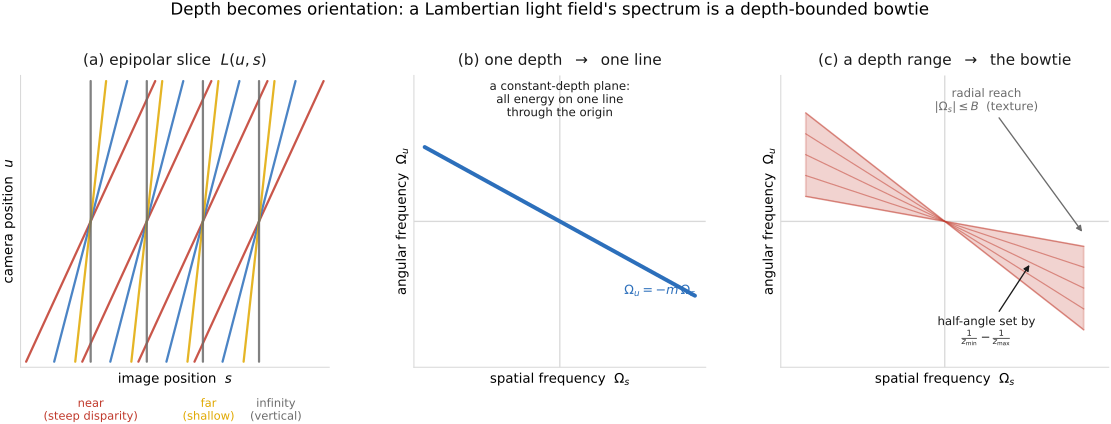
31.6.2 Depth is slope is spectral orientation⧉
31.6.3 The bowtie: a spectrum shaped by the scene's depth range⧉
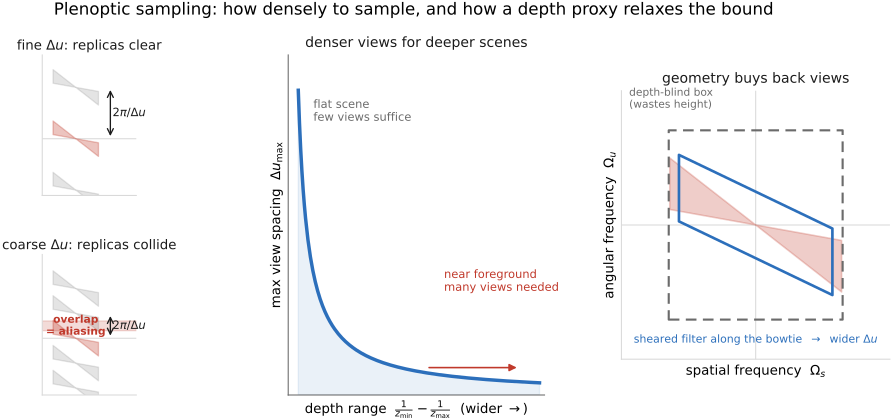
31.6.4 How densely must you sample? The plenoptic-sampling bound⧉
31.6.5 Geometry buys back samples: the depth-vs-views tradeoff⧉
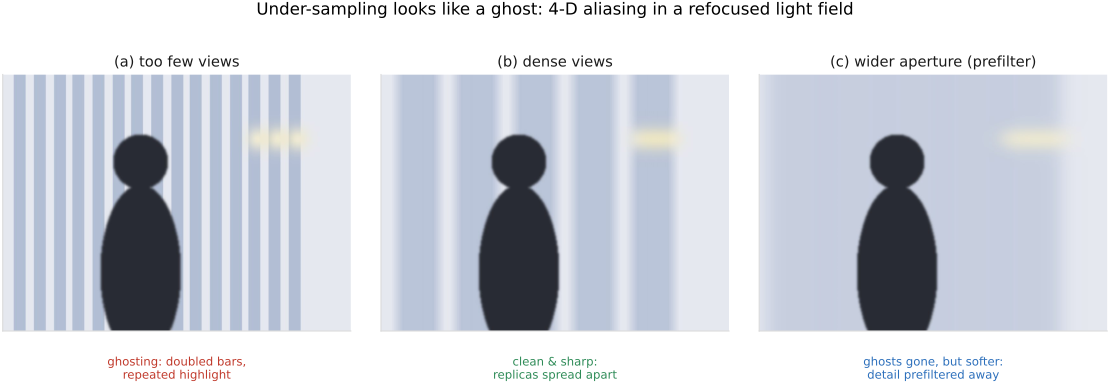
31.6.6 Under-sampling looks like a ghost⧉
31.6.7 Where this sits⧉
▸31.7 Lumigraph and shape priors for sharper light field rendering⧉
fig-lumigraph-geometry
fig-lumigraph-geometry ·
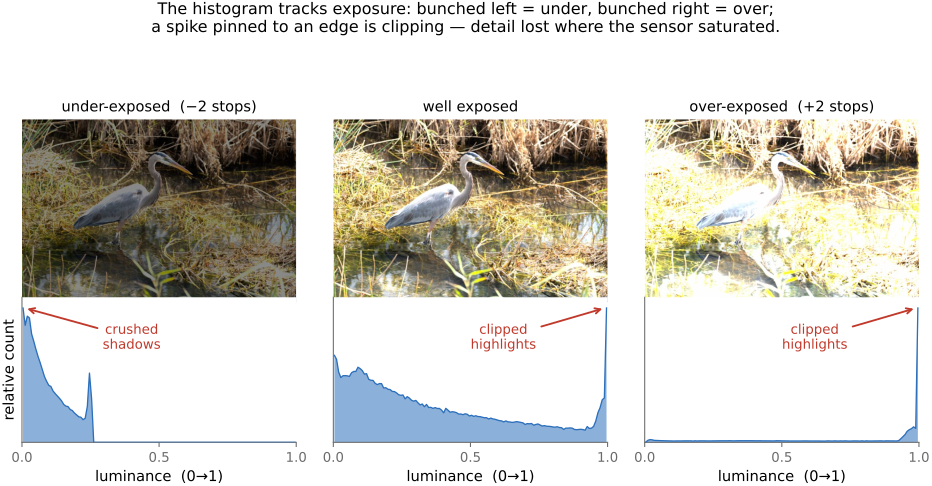
fig-histogram-exposure
fig-histogram-exposure · one real scene at three exposures (−2 / as-shot / +2 stops), each with its luminance histogram — distribution slides left→right, clipping spikes pin to the edge; crushed-shadow / clipped-highlight callouts (BASIC histograms) ✅
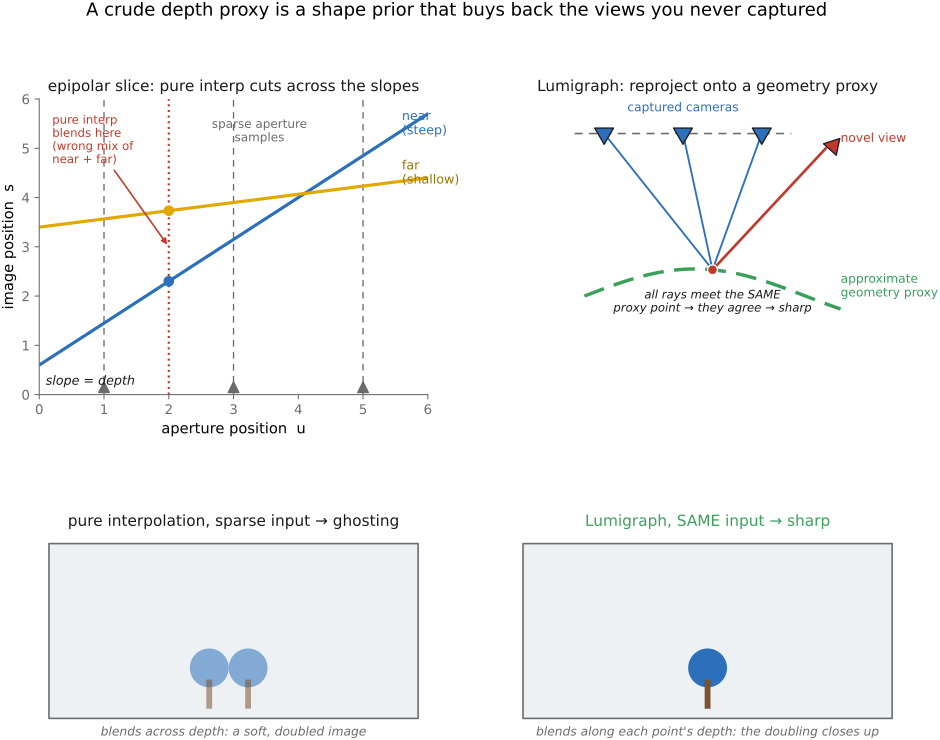
31.7.1 Pure light-field rendering blurs because it has no shape⧉
31.7.2 The Lumigraph: reproject onto a geometry proxy, then blend⧉
31.7.3 Unstructured inputs: free-hand views, no grid required⧉
31.7.4 Surface light fields⧉
▸31.8 Light field microscopy⧉
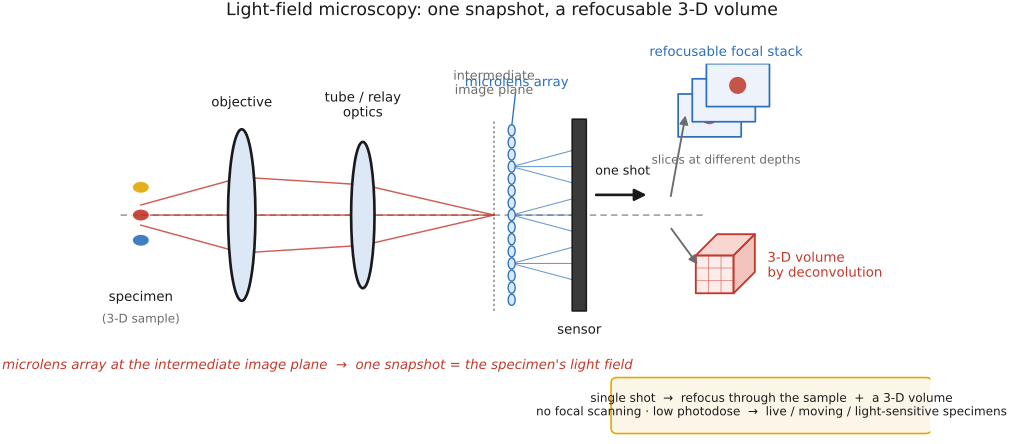
fig-lightfield-microscopy
fig-lightfield-microscopy ·
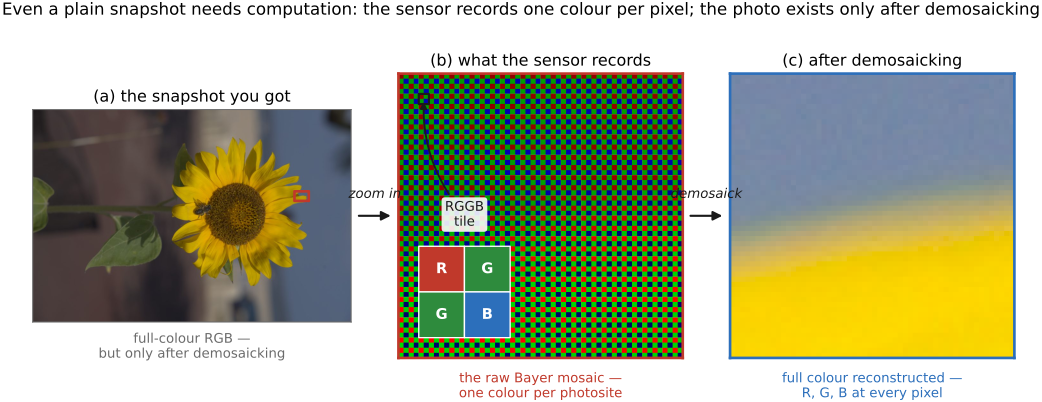
fig-demosaick-snapshot
fig-demosaick-snapshot · even a plain snapshot needs computation: one color per pixel (Bayer mosaic) → demosaicked RGB ✅
31.8.1 The optical setup: a microlens array at the intermediate image plane⧉
31.8.2 The spatial-versus-angular trade: a coarse 3-D volume⧉
31.8.3 Recovering the volume: synthetic refocusing, then 3-D deconvolution⧉
31.8.4 Why single-shot 3-D is the whole point⧉
▸31.9 Light field networks⧉
⬜ figure not yet created
`fig-light-field-network` (a small MLP maps a parameterized ray → RGB fig-light-field-network
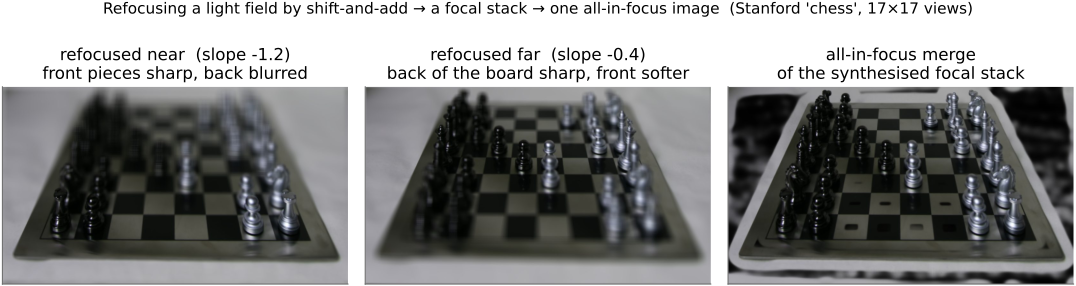
fig-lightfield-refocus
fig-lightfield-refocus · **light field → refocus → merge:** refocus a light field by **shift-and-add** (refocused near / refocused far) → the synthesized focal stack merged to one all-in-focus image. placed in **[[11 Advanced computational photography]] § Refocusing** (forward-ref'd from the DoF & focal-stack chapters); registered here next to its focus-stacking siblings ✅
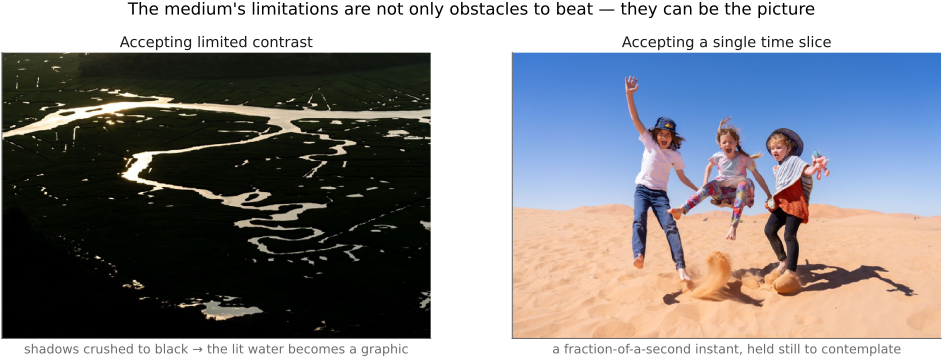
fig-medium-expressive
fig-medium-expressive · two-panel: the medium's limitations as expression — a backlit estuary with shadows accepted to black (limited display contrast as a graphic), and three kids frozen mid-jump (a single time slice held to contemplate); intro counterpoint to "alleviate limitations" ✅
31.9.1 NeRF: a radiance field rendered by volume integration⧉
31.9.2 Light field networks: a ray straight to color, in one evaluation⧉
31.9.3 A family of neural light fields⧉
31.9.4 Test-time training: the network as the per-scene prior⧉
31.9.5 Hand-off: from rays to radiance fields and generation⧉
▸31.10 Practical aspects of light field cameras⧉
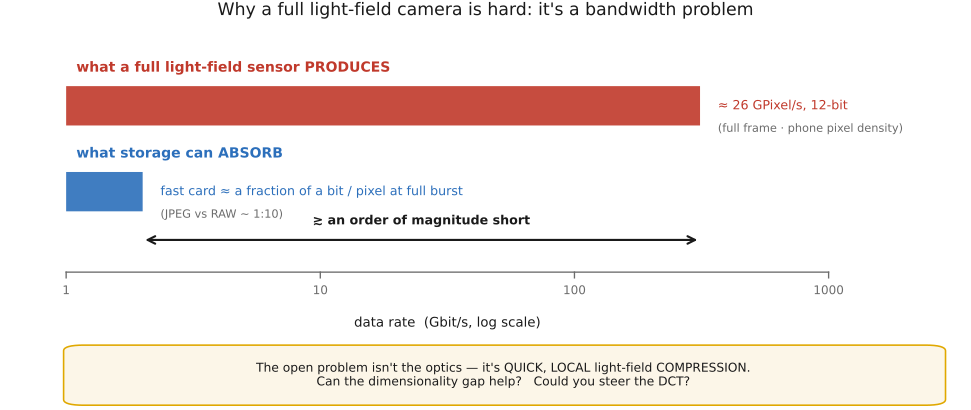
fig-lightfield-bandwidth
fig-lightfield-bandwidth ·
⬜ figure not yet created
may be a sidebar instead.
---
31.10.1 Do you lose all that resolution?⧉
31.10.2 Can you do video? Is it practical? — the bandwidth problem⧉
31.10.3 The time dimension is high speed⧉
31.10.4 Adjacent frontiers, briefly⧉
31.10.5 So, do I get my camera?⧉