BookNotesSlidesP-sets Syllabusdraft · v0.2.49.1
💬Comments welcome. To leave a note, select any text and click the note / highlight button that pops up — or open the panel with the tab at the top-right (‹). Notes are visible only inside our private review group.
Computational Photography, an AI-powered Slopendium — 33 Computational optics and coded imaging
expand to📖 Full book outline1 parts · 10 chapters · 56 sections · 20 figures embedded · 1 placeholders · double-click a figure to enlarge
▸Part 33 COMPUTATIONAL OPTICS AND CODED IMAGING⧉
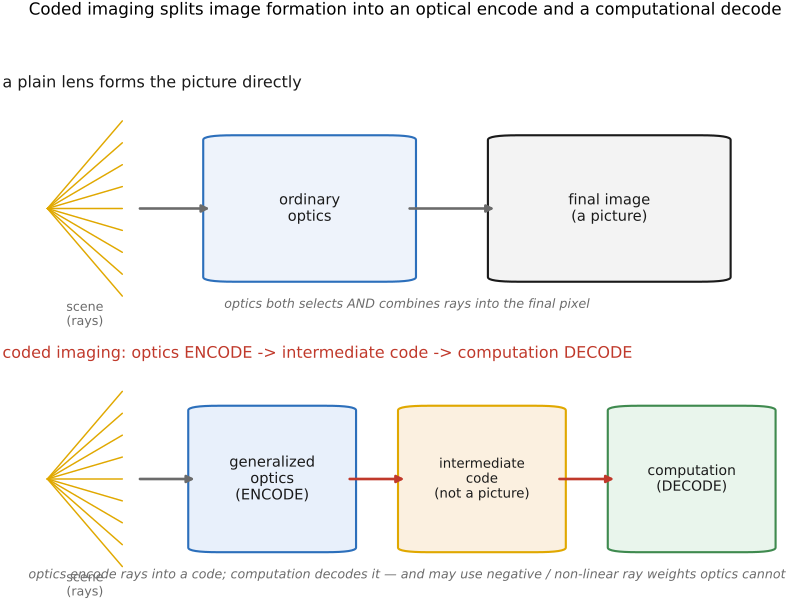
fig-coded-imaging-pipeline
fig-coded-imaging-pipeline ·
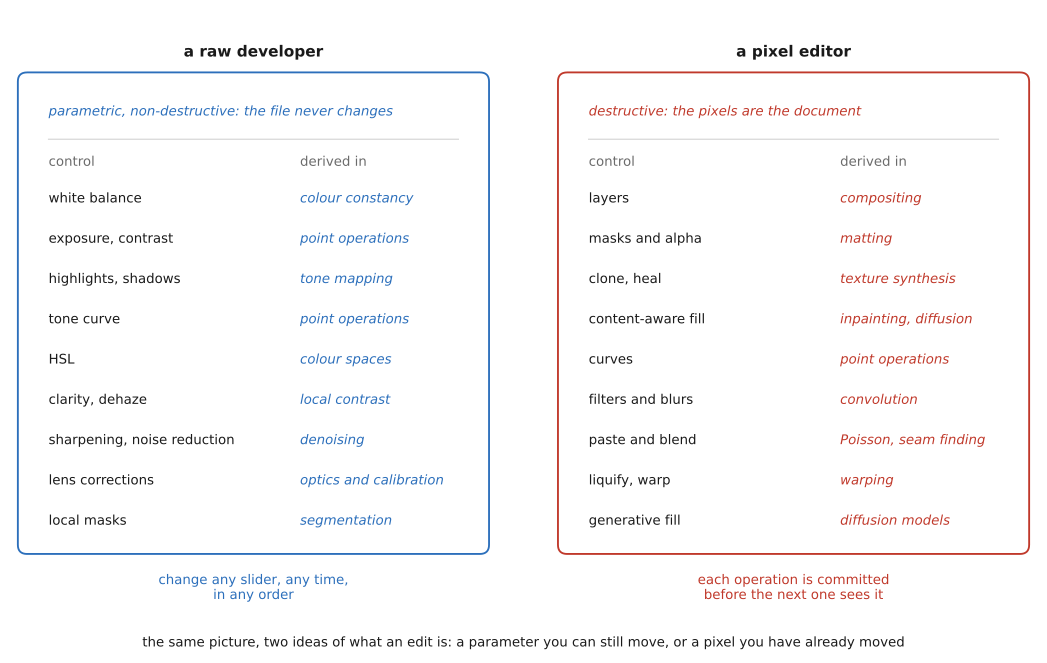
fig-editing-lr-vs-ps
fig-editing-lr-vs-ps · the two digital darkrooms: a Lightroom-style parametric develop panel (WB, exposure/contrast, tone curve, HSL, clarity/dehaze, sharpening/NR, lens corr., local masks) vs a Photoshop-style layer/mask workspace (clone/heal, content-aware fill, dodge/burn, curves) — each tool annotated with the chapter that derives it ⬜
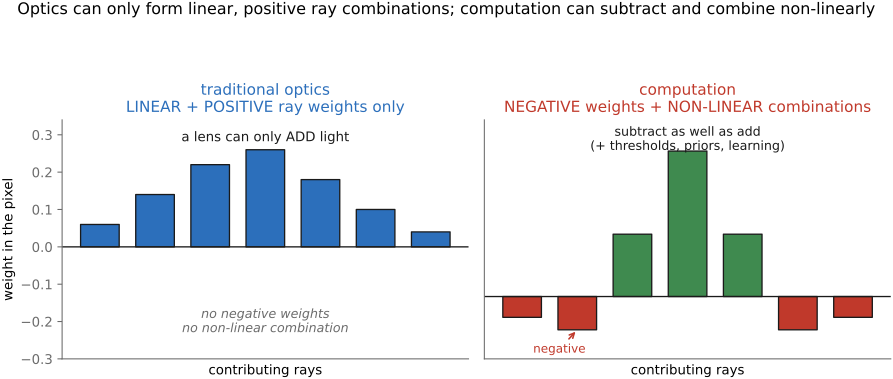
fig-optics-linear-positive-vs-computation
fig-optics-linear-positive-vs-computation ·
<!--uid: computational-optics-and-coded-imaging-->
▸33.1 Wavefront coding⧉
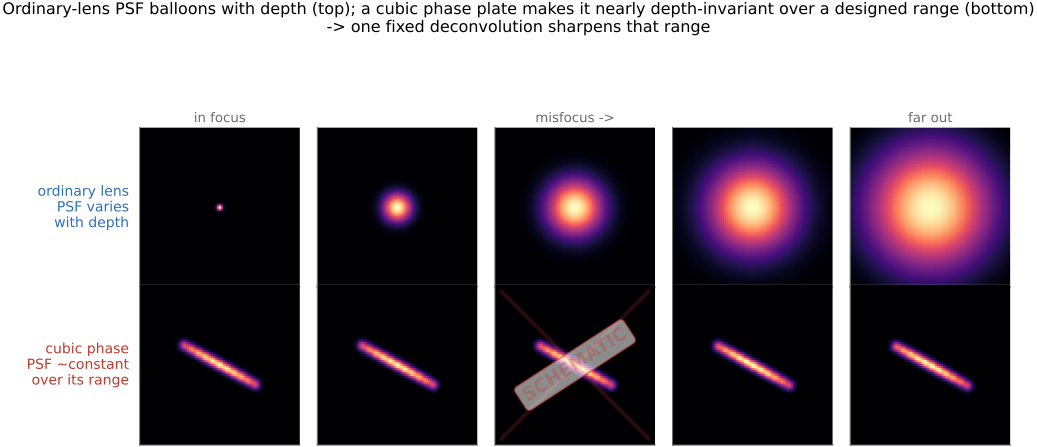
fig-wavefront-coding-psf
fig-wavefront-coding-psf ·
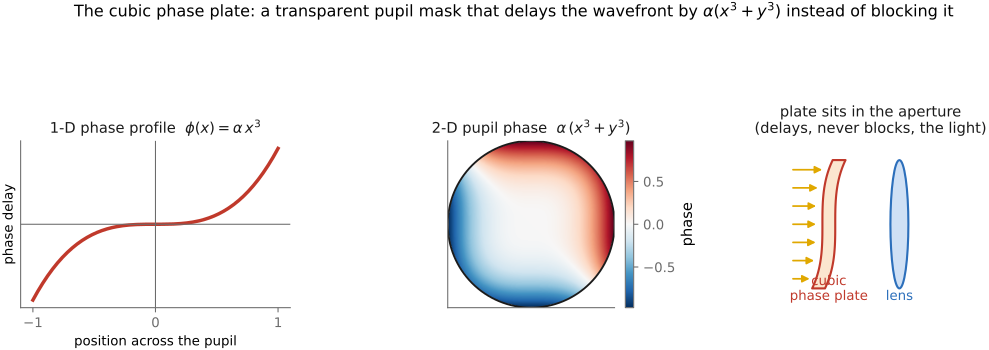
fig-cubic-phase-mask
fig-cubic-phase-mask ·
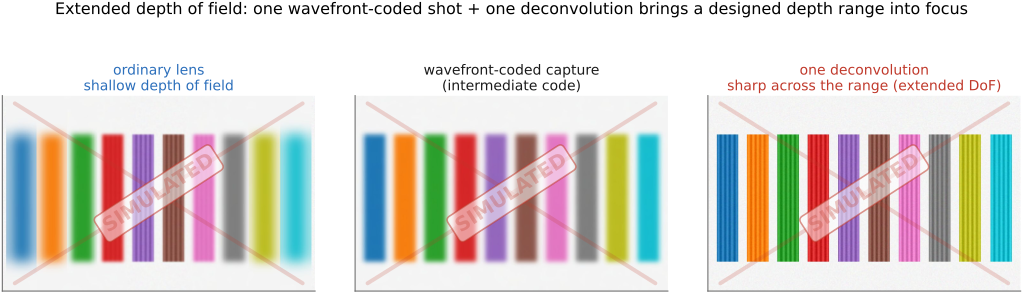
fig-edof-result
fig-edof-result ·
33.1.1 Why you cannot just deblur defocus⧉
33.1.2 The fix: re-engineer the blur⧉
33.1.3 The cubic phase plate⧉
33.1.4 The depth-invariant PSF and a single deconvolution⧉
33.1.5 What it costs⧉
33.1.6 Where it sits⧉
▸33.2 Compressive sensing⧉
33.2.1 Sub-Nyquist: fewer measurements than unknowns⧉
33.2.2 Two ingredients: incoherent measurements and sparsity⧉
33.2.3 Recovery by $\ell_1$: the geometry of basis pursuit⧉
33.2.4 Why it works: the restricted isometry property, intuitively⧉
33.2.5 The single-pixel camera⧉
33.2.6 Where compressive sensing wins, and where it does not⧉
▸33.3 Coded aperture⧉
33.3.1 The bad forward operator of a clear aperture⧉
33.3.2 A mask designed for a flat, zero-free spectrum⧉
33.3.3 One shot, two outputs: depth and an all-in-focus image⧉
33.3.4 The design criterion: which pattern?⧉
33.3.5 Coded-aperture pairs: splitting the trade across two shots⧉
33.3.6 Heterodyning the light field: dappled photography⧉
33.3.7 Where it sits⧉
▸33.4 Phase-coded apertures⧉
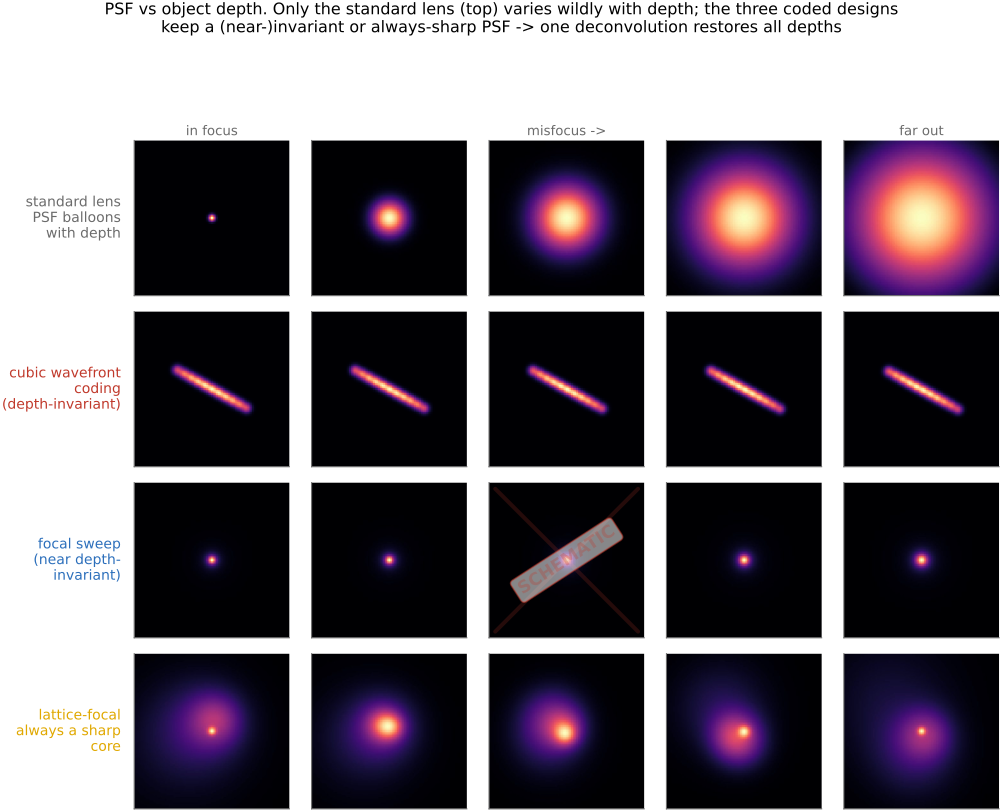
fig-phase-coded-psf-vs-depth
fig-phase-coded-psf-vs-depth ·
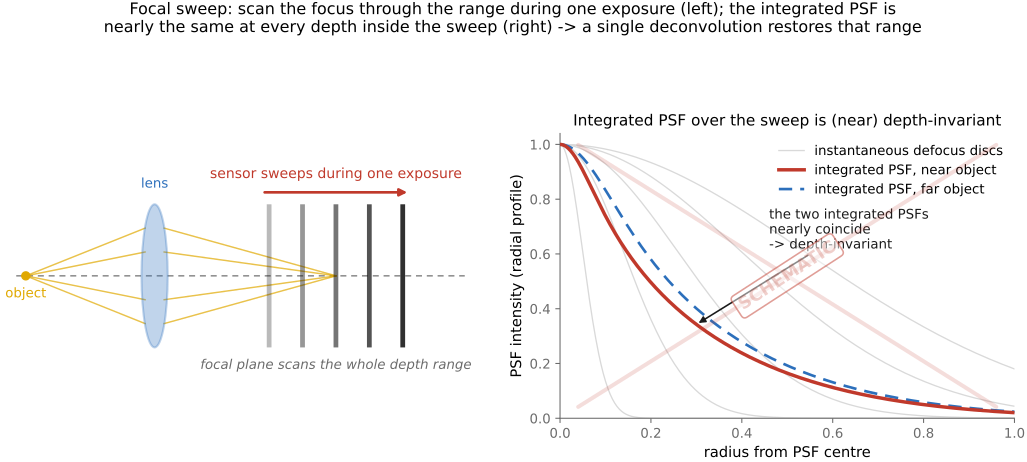
fig-focal-sweep
fig-focal-sweep ·
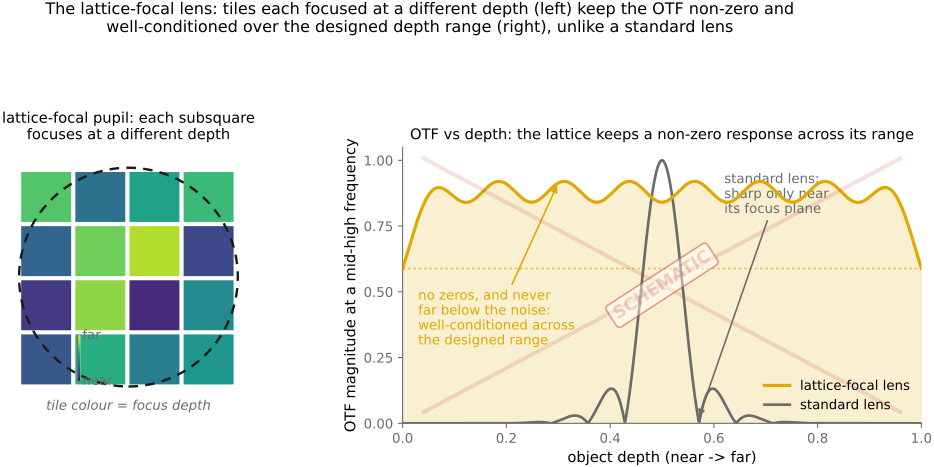
fig-lattice-focal-lens
fig-lattice-focal-lens ·
33.4.1 A reminder on wavefront coding⧉
33.4.2 Focus sweep⧉
33.4.3 The lattice-focal lens⧉
33.4.4 Where it sits⧉
▸33.5 Code in time (phase, amplitude)⧉
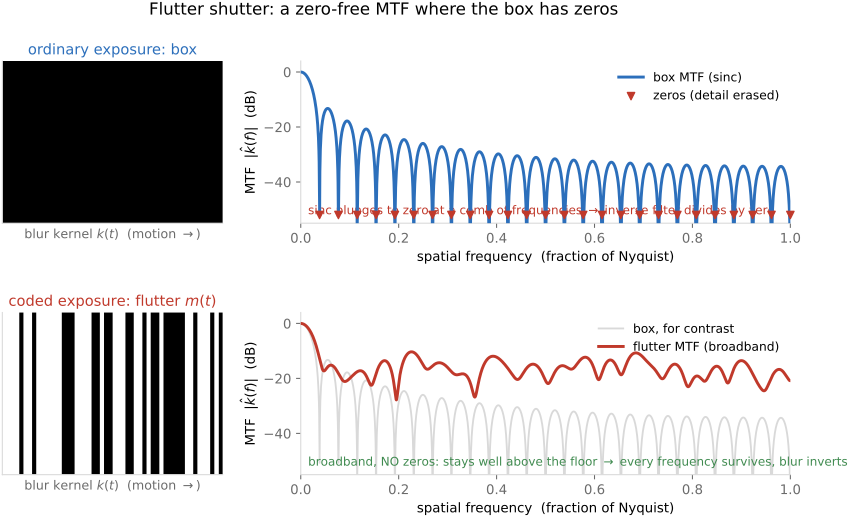
fig-flutter-shutter-mtf
fig-flutter-shutter-mtf ·
fig-kernel-spectra
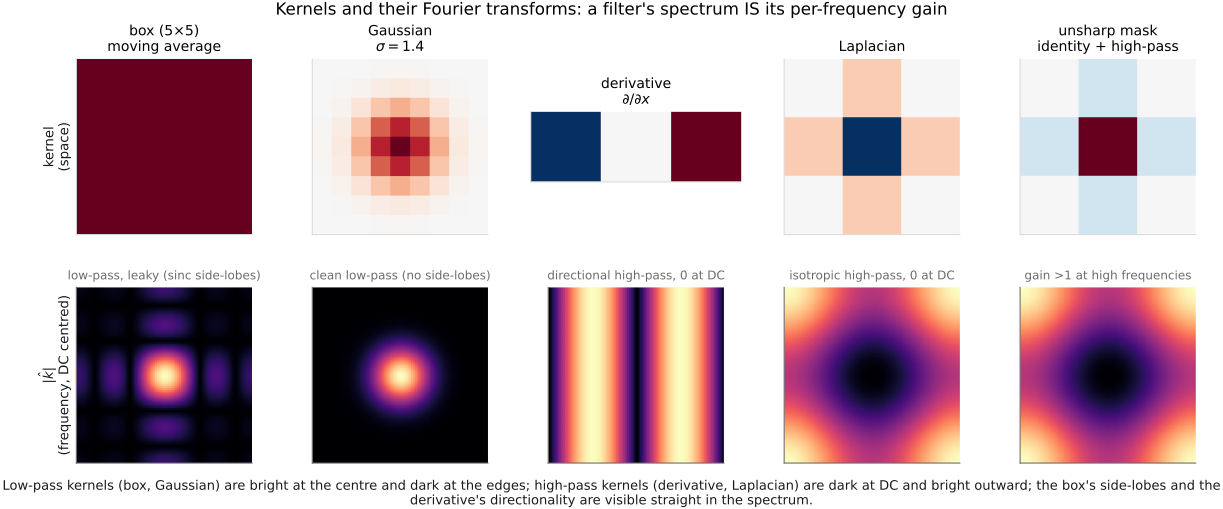
fig-kernel-spectra · five common kernels (box, Gaussian, derivative ∂/∂x, Laplacian, unsharp mask) shown in space and as their Fourier magnitudes — a filter's spectrum IS its per-frequency gain (low-pass leaky vs clean, directional/isotropic high-pass, boosting) ✅
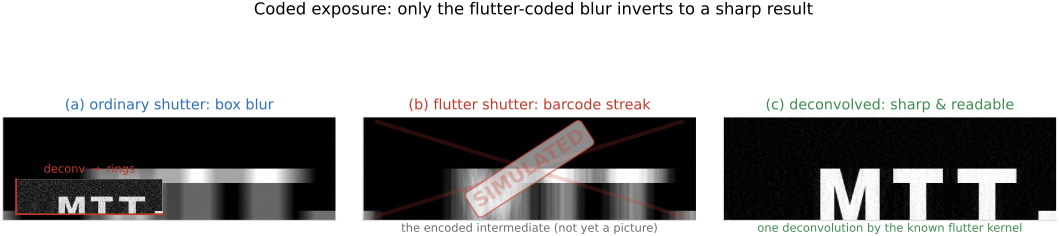
fig-coded-exposure-deblur
fig-coded-exposure-deblur ·
33.5.1 Why ordinary motion blur is (almost) unrecoverable⧉
33.5.2 The flutter shutter: chop the exposure into a code⧉
33.5.3 The decode: one deconvolution, a sharp moving object⧉
33.5.4 Amplitude in time, and phase in time⧉
33.5.5 Coded strobing, temporal multiplexing, and compressive video⧉
33.5.6 Motion-invariant photography⧉
33.5.7 Where it sits⧉
▸33.6 Theoretical analysis of imaging systems in the 4D light field Fourier domain⧉
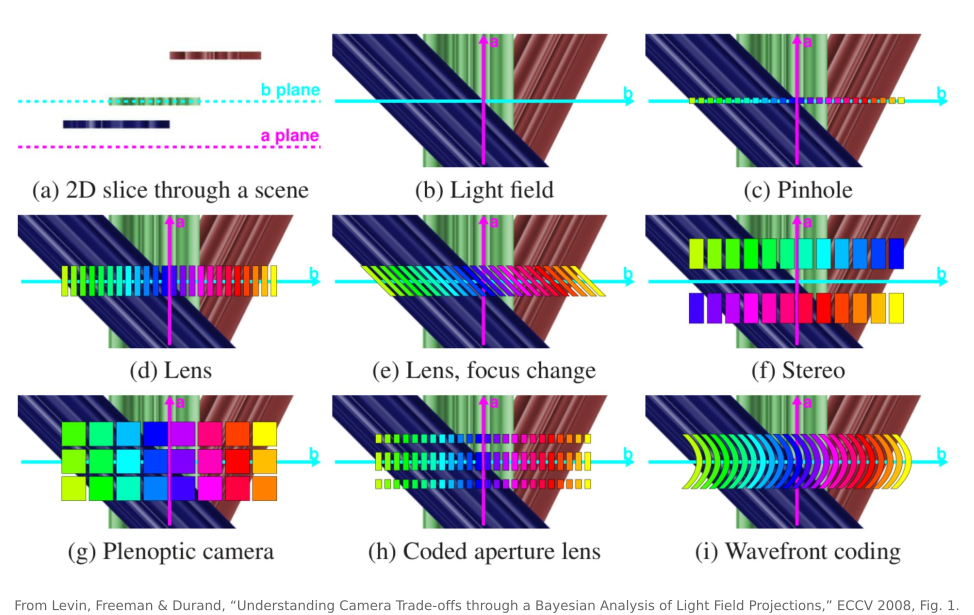
fig-camera-tradeoffs-1
fig-camera-tradeoffs-1 ·
fig-lightfield-refocus
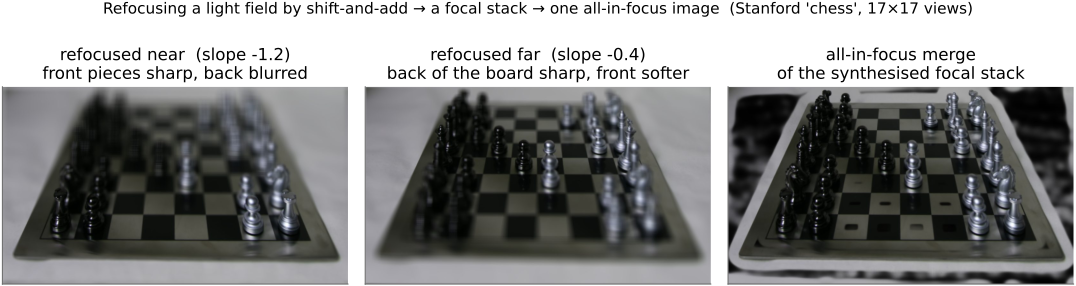
fig-lightfield-refocus · **light field → refocus → merge:** refocus a light field by **shift-and-add** (refocused near / refocused far) → the synthesized focal stack merged to one all-in-focus image. placed in **[[11 Advanced computational photography]] § Refocusing** (forward-ref'd from the DoF & focal-stack chapters); registered here next to its focus-stacking siblings ✅
33.6.1 The light field's spectrum, and the one move that explains everything⧉
33.6.2 Every camera is a different slice⧉
33.6.3 Putting cameras on one footing: the Bayesian comparison⧉
33.6.4 The dimensionality gap: most of the 4-D spectrum is afocal⧉
33.6.5 The lattice-focal lens: tiling the wedge⧉
33.6.6 The upper bound, and the gap we have not closed⧉
33.6.7 From cameras to light transport: the same spectral lens⧉
33.6.8 Where this leaves the part⧉
▸33.7 End-to-end optimization⧉
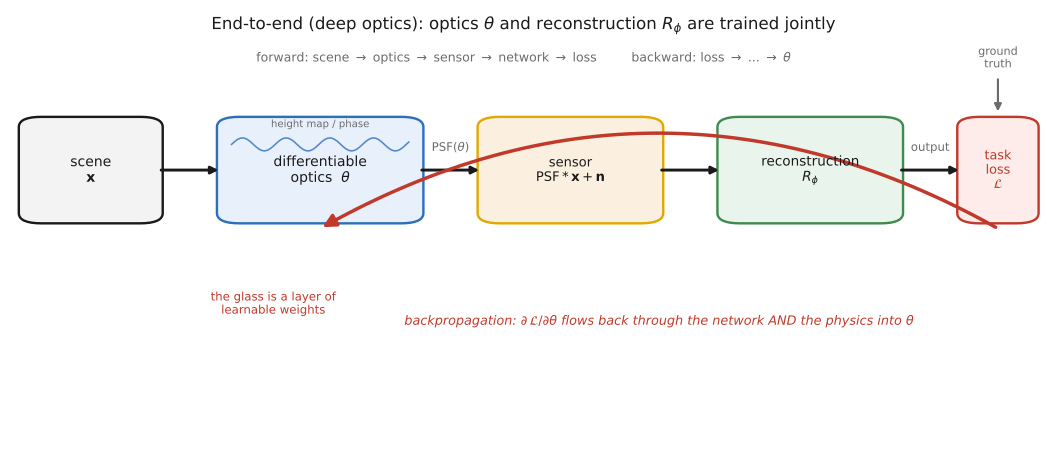
fig-end-to-end-loop
fig-end-to-end-loop ·
fig-deep-optics-result
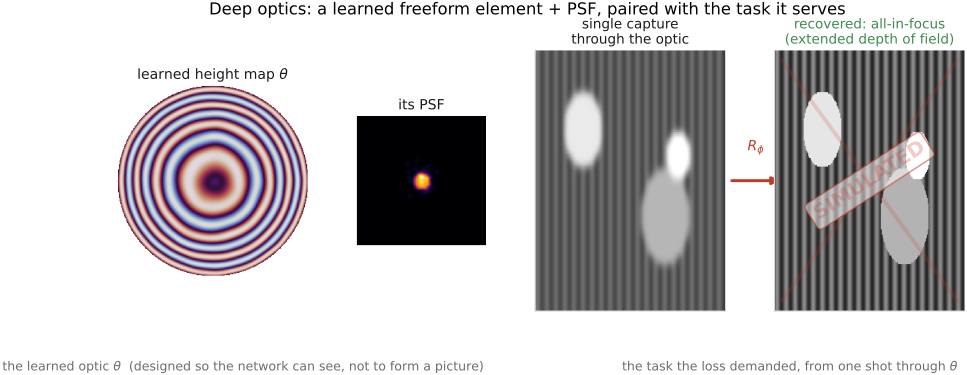
fig-deep-optics-result ·
33.7.1 The pipeline as one differentiable graph⧉
33.7.2 Backpropagating into the glass⧉
33.7.3 What gets designed: a height map, not a hyperparameter⧉
33.7.5 What it costs, and where it can go wrong⧉
33.7.6 Where it sits⧉
▸33.8 Fourier optics⧉
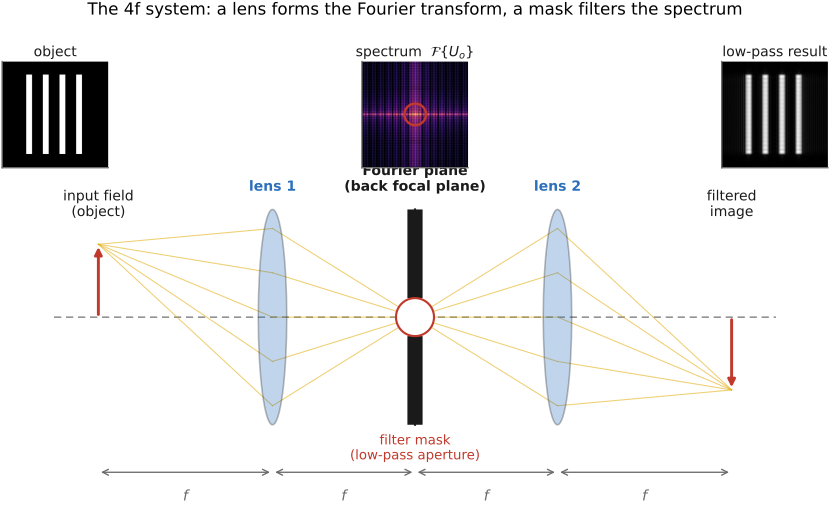
fig-lens-fourier-transform
fig-lens-fourier-transform ·
⬜ figure not yet created
the spectrum made physical)
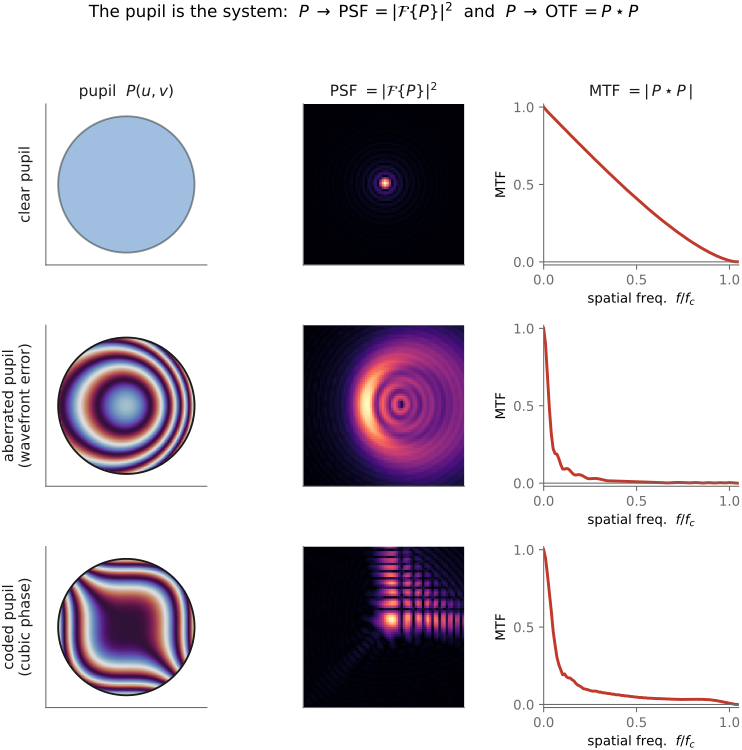
fig-pupil-otf-psf
fig-pupil-otf-psf ·
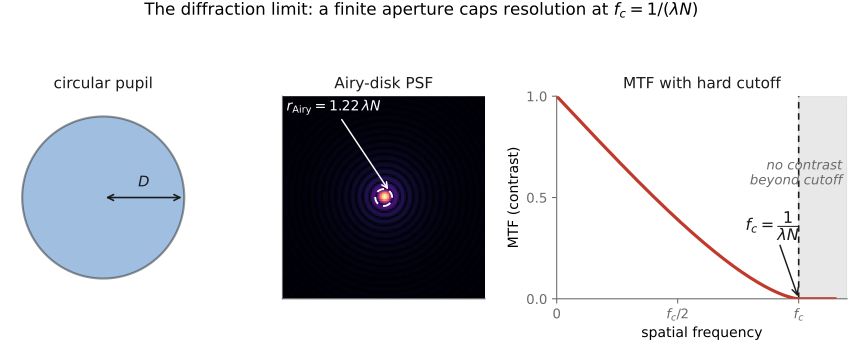
fig-diffraction-limit-airy
fig-diffraction-limit-airy ·
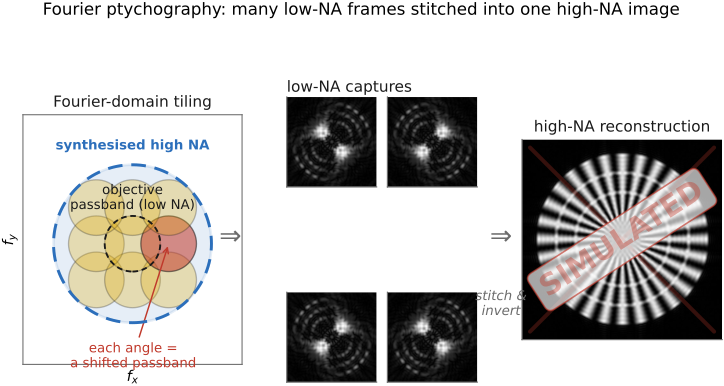
fig-fourier-ptychography
fig-fourier-ptychography ·
equations
coherent image (field) $U_i = \mathcal F^{-1}\{ P\cdot \mathcal F\{U_o\}\}$
**coherent transfer function** $H_{\text{coh}}=P(u,v)$
**incoherent OTF** $H(u,v)=\dfrac{P\star P}{\int|P|^2}$ (normalized autocorrelation of the pupil)
**PSF** $h(x,y)=|\mathcal F\{P\}|^2$
**diffraction-limited cutoff** $f_c = \dfrac{1}{\lambda N}$ (incoherent, $N=f/\#$)
**Abbe limit** $d_{\min}=\dfrac{\lambda}{2\,\mathrm{NA}}$
aberrations as pupil phase $P=A\,e^{i\,2\pi\,W(u,v)/\lambda}$ (wavefront error $W$, Zernike).
33.8.1 Light as a wave: amplitude, phase, and what "coherent" means⧉
33.8.2 Diffraction is a Fourier transform⧉
33.8.3 A lens computes a Fourier transform⧉
33.8.4 The pupil function *is* the transfer function⧉
33.8.5 The diffraction limit⧉
33.8.6 Aberrations are pupil phase⧉
33.8.7 Every code in this part is a choice of pupil⧉
33.8.8 Fourier ptychography: synthesizing a bigger pupil⧉
▸33.9 Exotic / advanced optics⧉
33.9.2 GRIN⧉
33.9.3 Metalenses and advanced crazy optics à la Barbastathis (coherent though)⧉
33.9.4 Non-linear optics⧉
▸33.10 Optical modulators (spatial light modulators): DMD and LCD/LCoS⧉
• **DMD** — micromirror array, each mirror tilts ± → **binary amplitude**, very fast (kHz); DLP projectors, single-pixel / compressive imaging, coded exposure & illumination
• **LCD / LCoS** — liquid-crystal pixels rotate polarization → with a polarizer give **grayscale amplitude**; in **phase-only** mode the controllable retardance imposes an arbitrary **phase** profile (programmable lens / hologram / aberration corrector)
• a programmable SLM is the **active** cousin of the fixed coded masks above (and of metalenses) — same idea (shape the wavefront), but reconfigurable on the fly